

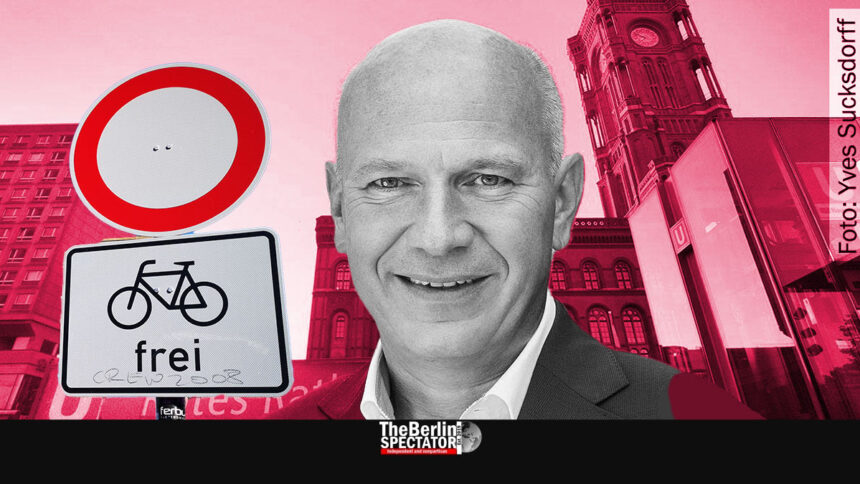
Update July 10th, 2026, 5:20 p.m. CET: Kai Wegner gives up candidacy for Governing Mayor.
Berlin, July 10th, 2026 (The Berlin Spectator) – Berlin’s governing Christian Democratic Union (CDU) is heading into what could become one of the most consequential meetings in its recent history, with the political future of Mayor Kai Wegner hanging in the balance just weeks before the city’s September election.
According to German-language media reports, party leaders are scheduled to meet Friday evening to discuss Wegner’s candidacy, the struggling election campaign, internal party sentiment and the CDU’s prospects in the September 20th state election. The gathering comes amid growing calls from within the party for the mayor to step aside.
The immediate trigger for the crisis is Wegner’s handling of public communication after the massive power outage that hit parts of southwestern Berlin following what authorities believe was a far-left arson attack on critical infrastructure on January 3rd. While the blackout itself has long been resolved, questions about what Wegner was doing that day — and whether he accurately described his actions afterward — have developed into a political scandal that now threatens his leadership.
The controversy has unfolded over several months. On January 4th, Wegner said he had spent the previous day coordinating the response by phone from home, explaining that he had “locked” himself in his office to stay informed. Two days later, his office again defended his account, insisting he had been on the phone throughout the day and rejecting speculation that he had been away from Berlin.
Tennis Match Durting Outage
The narrative shifted on January 7th after broadcaster RBB reported that Wegner had played tennis during the crisis. The mayor acknowledged spending an hour on the court, saying he needed to clear his head, while maintaining that he had begun making calls to crisis officials early that morning. Later the same day, he conceded he should have disclosed the tennis session immediately.
Does The Berlin Spectator have a newsletter? Sure. You can subscribe to it here.
He repeated that admission in Berlin’s state parliament on January 15th, saying he should have been transparent from the outset about taking time for sports during the emergency.
Another turning point came in late March. In an interview with the “Bild” tabloid, Wegner apologized for what he called communication mistakes and said he had not intended to mislead the public. Unlike his earlier statements, however, he no longer emphasized extensive phone calls that morning, instead describing much of his communication as text messaging.
The issue resurfaced this week after the “Tagesspiegel” daily reported that the mayor’s office had clarified no phone calls had taken place before 12:45 p.m. on January 3rd. Officials said exchanges before then had occurred via text messages. Wegner argued that this was consistent with his March explanation, while his office later sought to clarify remarks he had made in an RBB interview. On Tuesday, he expressed regret on X over the impression created by his original statements.
Open Letter Circulating in Party
The latest revelations have intensified criticism inside the CDU. A draft open letter circulating among party members urges Wegner to withdraw his candidacy, arguing that remaining in office further damages public trust in politics. According to the document, every additional day in office reinforces the belief that politicians do not tell the truth.
Among the most prominent critics is investor and entrepreneur Christian Miele, who has publicly demanded Wegner’s resignation. Miele says dozens of CDU members have already expressed support for the initiative and argues that the party cannot win September’s election with Wegner as its leading candidate.
The mayor’s own schedule has reflected the uncertainty surrounding his position. He canceled an appearance Thursday evening and withdrew from a planned speech before Germany’s Bundesrat on Friday, where he was replaced by Berlin Finance Senator Stefan Evers. It remained unclear whether he would attend other public events later in the day.
The internal turmoil comes at a particularly difficult moment for the CDU. Opinion polls show the party at around 17 percent, a dramatic decline from the 28.2 percent it won in the 2023 election. Some members now blame Wegner personally for the slide, while Social Democratic challenger Steffen Krach has already ruled out governing with him after the election.
Whether Friday’s CDU meeting results in a united front behind the mayor or marks the beginning of a leadership change could shape not only the party’s campaign but also Berlin’s political landscape ahead of the September vote.