

Berlin, July 25th, 2026 (The Berlin Spectator) – Chancellor Friedrich Merz used the resignation of CDU/CSU parliamentary group leader Jens Spahn to launch a broader shake-up of his government and the CDU leadership. But the reorganization was overshadowed by a dramatic last-minute scramble over the Transport Ministry.
When Merz stepped into the Chancellery garden early Saturday morning to introduce Health Minister Nina Warken as his new Chief of Staff and CDU General Secretary Carsten Linnemann as her successor in the health portfolio, it was already visible on his face that something had gone wrong. Standing beside him was Digital State Secretary Philipp Amthor, who is to become the government’s new coordinator for federal-state relations.
Güntzler Accepts, Then Turns Merz Down
One more newcomer had originally been expected to join the lineup: Fritz Güntzler, the Union’s finance expert in the Bundestag, was set to replace Transport Minister Patrick Schnieder, whom Merz wanted to remove. The 60-year-old told Merz on Thursday evening that he would take the job, then reconsidered overnight and turned it down the next morning, citing professional concerns. “A goalkeeper shouldn’t play left wing,” coalition sources said of the episode.
According to German dailies, Schnieder informed several Bundestag members of his own dismissal by text message, at almost the same moment: “The Chancellor told me yesterday, late in the afternoon, that he would be dismissing me as Transport Minister. This morning at 9 a.m. he will make that public, among other things at a press conference. I wanted to let you know beforehand,” the 58-year-old wrote. “Thank you all for your tremendous support!”
By the time Merz walked into the Chancellery garden with his three new appointees for the ceremony, reports of Schnieder’s planned dismissal and the collapsed succession plan were already circulating — leaving the Chancellor visibly wrong-footed. All he could offer was a hint that more was coming: “There will be further changes to the federal cabinet. I will inform you about that in due course.”
The rather subdued event lasted just twelve minutes. Merz took no questions. “Thank you, and good luck with your work,” was all he said before departing — presumably until the next announcement.
Bilger Floated as Possible Transport Minister
The Union’s parliamentary floor leader, Steffen Bilger, is now being discussed as a possible successor to Schnieder. He spent years on the Bundestag’s Transport Committee and is regarded as a genuine expert in the field. He currently ranks third in the parliamentary group, behind the floor leader and the CSU regional group chief. Choosing Bilger would also let Merz sidestep criticism that both of the CDU’s top parliamentary posts were held by lawmakers from the federal state of Baden-Württemberg.
For now, that remains speculation — nothing is confirmed. Sources within the CDU describe a “highly volatile” reshuffling underway. Further changes at the Chancellery are possible, German media report, including the replacement of Minister of State for Sport Christiane Schenderlein, reportedly by a former athlete.
When Merz will announce his next personnel decisions remains unclear. He said the changes would need “a few more days, and perhaps more time, not least given the summer recess,” adding that he would decide “without time pressure and with the necessary care and consultations.”
That leaves the reshuffle in an unplanned holding pattern. Merz had originally promised swift decisions after Spahn’s resignation. On Wednesday, only outgoing Chief of Staff Thorsten Frei had been unveiled as the new parliamentary floor leader — though it was already expected at that point that the wider personnel package would follow.
“Chaotic” and “Rudderless”
Now the process has gone into a second round of overtime. Within the Union, the handling of the affair is being described as “rudderless” and “chaotic.” Comparisons are being drawn to last year’s summer recess, when a dispute over filling a seat on the Federal Constitutional Court triggered a coalition crisis.
This time, the personnel matters directly concern only one coalition partner. The SPD has kept its public comments notably restrained. “As the SPD, we stand ready and reliable within the coalition, and we look forward to working in a spirit of trust with our new colleagues in government, wishing everyone a good start in their new roles,” was all SPD General Secretary Tim Klüssendorf offered.
The drawn-out affair could still prove very uncomfortable for the Chancellor. He is likely to feel the brewing frustration at the latest during the special session of the Bundestag parliamentary group on Wednesday. Whatever momentum the coalition had built after quietly finalizing its reform package — momentum Merz had hoped to reinforce with this reshuffle — appears to have evaporated. Frustration is running high within the conservative union parties CDU and CSU.
Warken Seen as a Forceful Operator
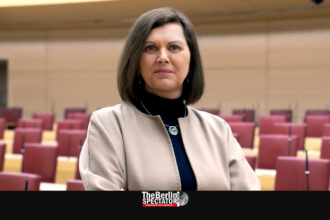
With Warken, Merz brings into the Chancellery a minister who just steered an important reform step through with the statutory health insurance savings package. “For the first time in the history of our country, a woman will move into the German Chancellery as its Chief of Staff,” Merz said, praising her as a forceful, effective politician. In her new role, she will be responsible for coordinating coalition business and cooperation with the states.
Linnemann had a chance to join the cabinet after the last federal election but let it pass. Now he is set to become Health Minister right in the middle of the reform process, and will immediately have to tackle long-term care reform. Merz is putting his trust in him: Linnemann oversaw the health portfolio during coalition negotiations and helped hammer out the relevant issues in the coalition committee, Merz said. “So he knows what he’s talking about.”
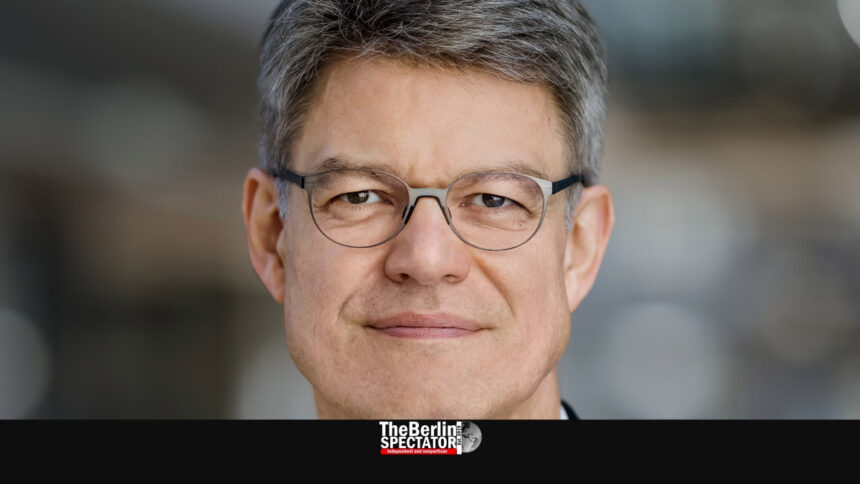
The new federal-state relations coordinator, Amthor, is seen as one of the CDU’s most talented young politicians. At the Digital Ministry, the 33-year-old had most recently focused on cutting bureaucracy. He is now to succeed Michael Meister, with whom the states had expressed dissatisfaction. Merz praised Amthor as a skilled politician and parliamentarian as well as an outstanding lawyer. “He is, incidentally, well connected with the heads of the state chancelleries in all 16 federal states.”
On Monday, Merz will brief the party on what the government reshuffle means for CDU headquarters. The formal appointment of the federal ministers is expected next Wednesday, government sources say, while the swearing-in is planned for the Bundestag’s first sitting week in September — an unusual sequence, though one the Chancellery considers legally sound.
The whole reshuffle was triggered by Spahn’s resignation as CDU/CSU parliamentary group leader on Saturday. He had previously disclosed publicly that he and his husband, Daniel Funke, had had a child via a surrogate mother in the United States — circumventing a ban that applies in Germany. His resignation came in response to sharp criticism, including from within his own party, over that decision.