

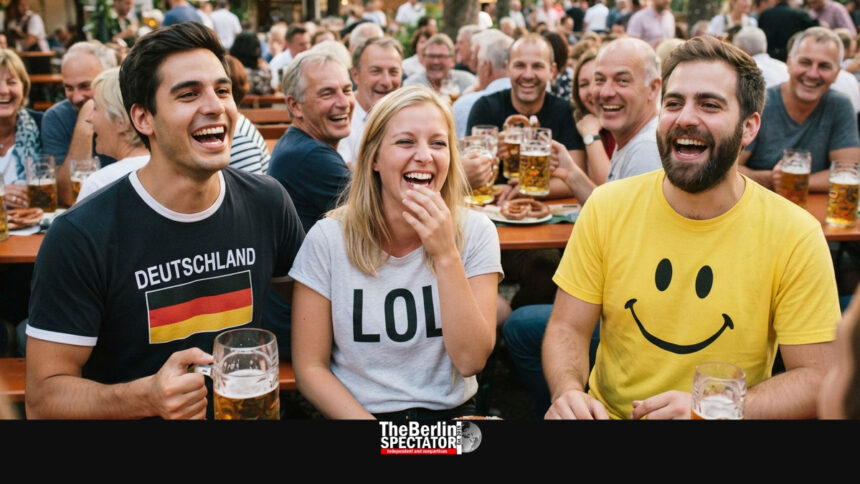
Berlin, September 19th, 2026 (The Berlin Spectator) – How funny is a landslide victory by the extremist far-right party AfD in Lower Saxony? How funny are gas prices of 2.40 Euro per liter (2.76 U.S. Dollars or 2.06 Pounds Sterling)? How funny is the political crisis in Berlin? How funny is the threat posed by Vladimir Putin, Islamists, as well as extremists on the left and the right?
Even if Putin’s war against Ukraine was over and if the Berlin government had the most popular Chancellor ever: Germans are not expected to be funny. It’s not part of their reputation. Instead of being funny, they are supposed to be stiff. Whoever makes this claim does have a case.
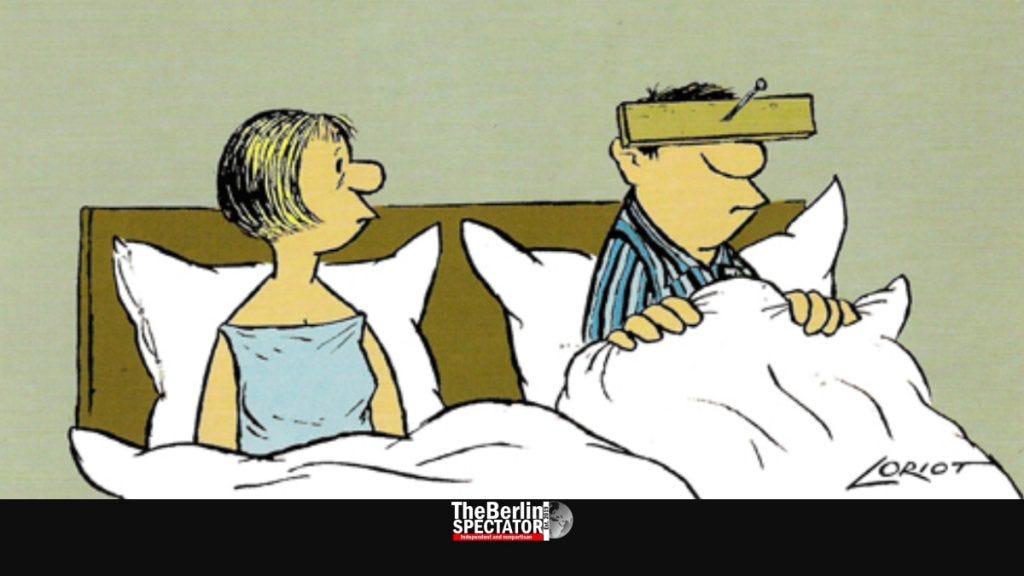
On the other hand, things change and there are noteworthy exceptions. Even several decades ago, some Germans did make people laugh. They included TV personalities like Vicco von Bülow, maybe the most multifaceted German jester ever, who called himself Loriot.
Little Flaws
He delivered legendary sketches, including one entitled “Ihr Bild hängt schief” (“Your Picture is Hanging Crooked”) in which he unintentionally turns an entire living room into rubble while waiting for an appointment. His cartoon characters were cute too. Loriot held up a mirror to the Germans and showed them their little flaws. Luckily, he did not forget the big ones either.
Political cabaret was big in the late 60s as well as the 70s and 80s. Dieter Hildebrandt, one of the co-founders of the group “Münchner Lach- und Schießgesellschaft”, ridiculed the Berlin government while comedians like Karl Dall and Otto Waalkes developed new forms of German humor. Dall made fun of his talk show guests, including politicians, and of himself, Waalkes joked about fairytales and everything else.
In the 1990s, independent television channels in the unified Federal Republic of Germany tried the American approach – and it worked. The show “RTL Samstag Nacht” basically copied the concept of the American original “Saturday Night Live”. Henry Gründler, a German-Colombian-Brazilian comedian, and his German-Jewish colleague Ruth Moschner made a younger generation roll on the floor laughing (yes, ROFL). They included rather coarse humor. Maybe that is why the show was convincing.
Unfinished Sentences
In the 80s and 90s, very gifted comedians appeared on German stages and TV screens. One of them is Hape Kerkeling. In his case, the adjective brilliant is more than appropriate. In 1985, when he was 20 years old, this guy started making Germans fall off their sofas and laughing their asses off. As a French translator, he insults a guest of state. As an expert for operas, he ridicules an entire orchestra. And as Queen Beatrix of the Netherlands, he hoaxes the royal family.
Since those times, quite a few gifted humorists have shown their faces on German TV. They include Piet Klocke, the master of unfinished sentences, Jochen Malmsheimer, a gifted rhetorician who explains the profanities of life, Atze Schröder, a bigmouth comedian who was actually born for his job, and Wolfgang Trepper, a grumpy old man who ridicules those who deserve it.
More and more female stand-up comedians are invading stages as well. One excellent example is Caroline Kebekus. With her full evening presentation “Pussy Terror”, she even got her own TV show for a while. Her successor program “Pussy Nation” was just as successful.
Social Criticism
On stage, she talks about real life, including farting ladies and other taboo subjects, but also deals with macho types, emancipation and what it has led to. “Our mothers burnt their bras, but we stand in line in order to get cast for misogynistic TV shows”, she says. With Caroline Kebekus, comedy meets social criticism and provocation.
Anke Engelke is another comedienne who has convinced an entire generation. Her sketches about German classes for migrants, welcoming a new hire to “the shittiest company in the country” or making the right choice at a computer store are legendary. So are her clips about home training for slightly overweight ladies.
There are a few great satirical TV news shows today: The ARD presents “Extra 3” with Christian Ehring, while the ZDF’s “Heute Show” with Oliver Welke has already become an institution. Both shows deal with the weekly news and are very well made indeed.
Spontaneous Idea
Until 2008, there was one humorous concept from the United States which had not yet been successfully adapted in Germany. The satirical newspaper “The Onion” has made Americans laugh for some 40 years now, first as a printed publication and later online. It was only a matter of time until the right person was going to launch a comparable website in Germany.
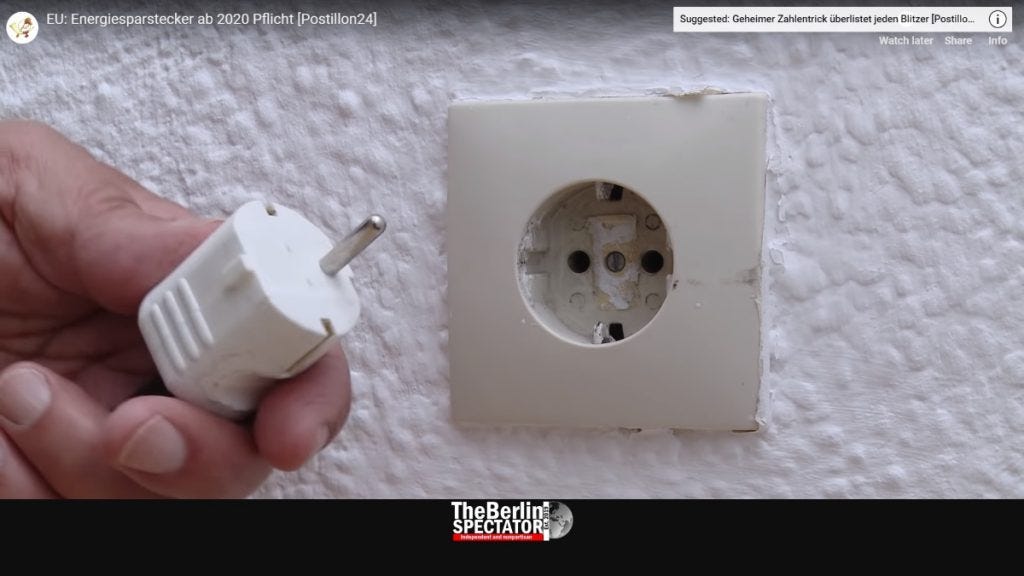
That person turned out to be Stefan Sichermann, who worked for an advertising agency when this spontaneous idea came to him. He founded “Der Postillon”, a satirical newspaper in German, in 2008, which he ran on his own. A few years later, it had become a full-time job. Today, “Der Postillon” has been online and successful for 18 years.
Running a satirical news site and making it successful is a a fine line to walk in the sense that developing just the right kind of humor is essential. It has to be positioned somewhere between “informed and intelligent” on the one hand, and ‘low-level stuff’ on the other. It should be stupid, but in a witty way. Another difficult task is not to fall into the cliché trap.
Hasselhoff in Korea
Over the years, “Der Postillon” developed into a satirical site of the kind almost everyone liked. In fact, Sichermann’s “news” were so good even prominent Germans and foreign media fell for them. In 2014, after Germany’s soccer team had defeated the Brazilian one 7:1, “Der Postillon” reported that a pub owner who had promised all of his guests a free schnapps for every German goal had gone bankrupt. A Russian media organization believed the article was accurate and spread it all over the place.
The content of Germany’s most prominent satirical news website consists of articles which look and sound like real ones, at first glance, and headlines that contain word games. A piece entitled “49 Things You Should Never Say After Having Sex” delivers valuable advice. “Der Postillon” reported that a railroader strike had not been noticed at all, since the trains had had their usual delays. At Ikea, a lady had only purchased the one item she had wanted to buy.
The world is definitely more interesting when David Hasselhoff, whose terrible song “Looking for Freedom” was big in Germany, is about to perform a gig at the Demarcation Line between the two Koreas, when the Grim Reaper just died of overwork, when women are facing discrimination because men pay less for tampons, or when divers find a treasure chest full of Bitcoins in a centuries-old pirate ship on the ocean floor.
Imported Humor
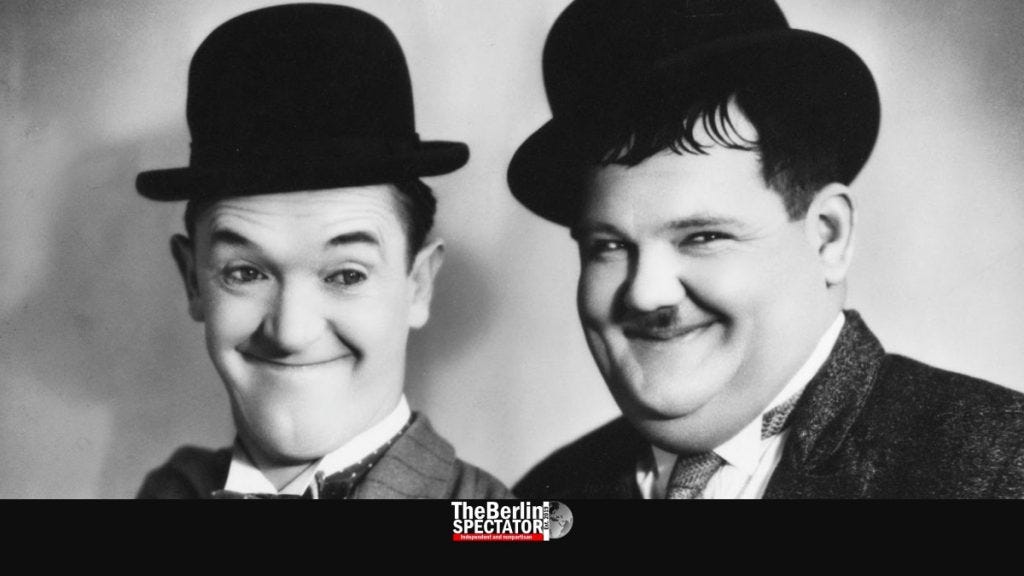
Germans also loved imported humor, delivered by Laurel and Hardy from Hollywood, Louis de Funès from France or Mr. Bean from the United Kingdom. They still do. Let’s not even mention Buster Keaton, Charlie Chaplin and comedies on the screen, such as “A Fish Called Wanda” or “Animal House” with John Belushi.
Nobody in Germany beats the late George Carlin, the late Don Rickles, the late Garry Shandling or the late Richard Pryor. Nor are we, the Krauts, as funny as certain living comedians from English-speaking countries. But we are improving. And we’ll get there. In the year 3000.
An earlier version of this piece was published on The Berlin Spectator in 2020. It was rewritten and republished after our relaunch.