

Berlin, September 22nd, 2026 (The Berlin Spectator) – Two days after the state elections, the political map is taking shape in both Berlin and Mecklenburg-Hither Pomerania. In the northeastern state, the extremist right-wing AfD won with 38.2 percent, more than doubling its result from five years ago. The SPD followed with 35.5 percent. “Die Linke” (The Left) got 6.5 percent and the Greens 5.7 percent, so both made it into parliament. The CDU received 4.9 percent and missed the five-percent hurdle. It is the first time the party has been voted out of a German state parliament. The BSW also failed narrowly with 4.8 percent.
The AfD will hold 32 seats, the SPD 29, and “Die Linke” and the Greens 5 each. Since no other party is willing to work with the AfD, it will most likely be left in opposition. Minister President Manuela Schwesig of the SPD could stay in office if the Greens join her and “Die Linke” in a three-party coalition. This is considered the likeliest outcome.
In Berlin, “Die Linke” won with 25.7 percent, which is twice its result from 2023. The CDU got 18.8 percent, the AfD 16.3 percent, the Greens 14.3 percent and the SPD 12.1 percent, the worst result in the party’s history. The seat distribution is 47 for “Die Linke”, 34 for the CDU, 29 for the AfD, 26 for the Greens and 22 for the SPD. The governing CDU and SPD coalition has lost its majority. Turnout rose in both states, reaching 74.2 percent in Berlin and 78.1 percent in Mecklenburg-Hither Pomerania.
Exploratory Talks
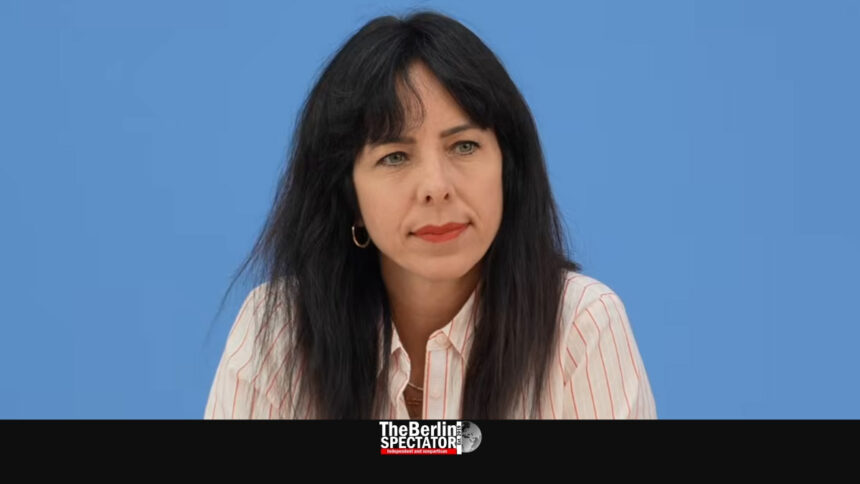
“Die Linke”‘s top candidate Elif Eralp, a 45 year old lawyer, wants to become the first Governing Mayor from her party. Its executive board has recommended exploratory talks with the SPD and the Greens. A party convention on Friday, September 25th, is to make the final decision. If it agrees, talks could begin next week. The Greens have already signaled that they are ready. A coalition of the CDU, the Greens and the SPD would also have a majority, but the CDU has little ground to claim a mandate to govern.
Eralp wants to put the expropriation of large housing companies, with compensation, at the center of any coalition negotiations. She points to the successful referendum of 2021 and says compromises will be necessary. SPD leader Steffen Krach had rejected expropriations as demanded by “Die Linke” during the campaign. Now he says his party will discuss the issue and financial planning in a matter-of-fact way.
The bigger obstacle is antisemitism. At an election party of “Die Linke”‘s Neukölln chapter, a known clan figure was present, as was a pro-Palestinian activist who has been criticized for positions hostilen to Israel. He is said to be close to the Palestinian terror group PFLP. This is “Die Linke”‘s fourth antisemitism scandal in three weeks.
Clear Stance
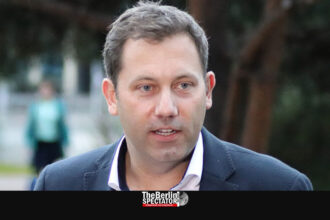
Krach said he expected a clear stance against antisemitism from every member of “Die Linke”‘s new parliamentary group, along with consequences, and wants to see deeds instead of words. Until then, he sees no basis for cooperation. SPD federal chair Bärbel Bas said it is very difficult to work with a party she described as antisemitic in parts, possibly large parts, and that the SPD must think very carefully about it.
Werner Graf, the Greens’ top candidate, called for urgent action and demanded to know how “Die Linke” intends to rein in the problematic part of its party. The Central Council of Jews in Germany had already warned against including “Die Linke” in the next government.
Meanwhile, the CDU is sorting out its own future. Its state board unanimously nominated Stefan Evers to lead its parliamentary group, replacing Dirk Stettner. Cornelia Seibeld was proposed as vice president of the Abgeordnetenhaus. Evers said it is up to “Die Linke” to move first but that his party is open to talks with the centrist parties.
The CDU group will meet for the first time on Thursday. The SPD, whose future course is open, faces a rebuilding effort. Former Mayor Franziska Giffey, who is not returning to the parliament, has called for a thorough review. Chancellor Friedrich Merz said on election night that he intends to stay on, but the pressure on him is likely to grow.