

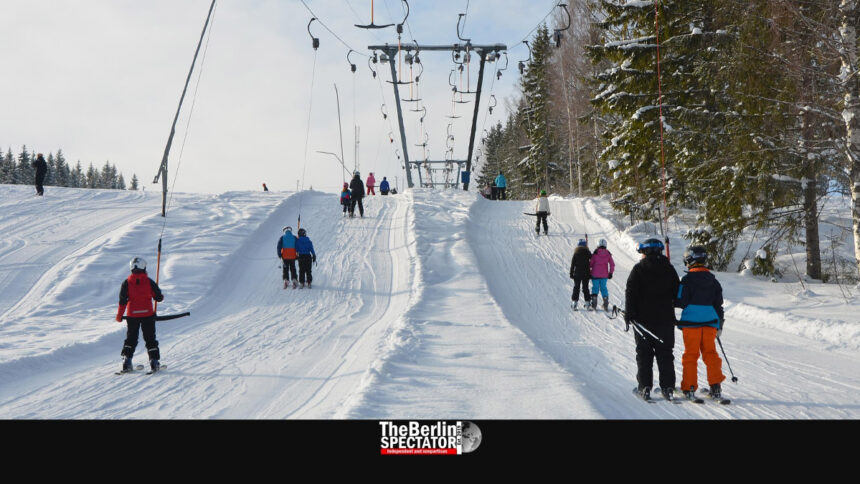
Berlin, November 28th, 2026 (The Berlin Spectator) – Some of the snow that skiers glided over on the Zugspitze on Friday fell more than eight months ago. Operators of Germany’s highest mountain saved it in shaded hollows and storage depots over the summer, then used it to groom the first runs of the season. Fresh powder did the rest, as reported by the broadcasters ARD and ZDF.
The Zugspitze is one of the few German ski areas that manage without artificial snowmaking, because its altitude guarantees natural cover. Around 40 centimeters, or about 16 inches, were lying on the slopes at the start. Clear skies and occasional sunshine drew a crowd, and the first people had lined up at the base before the opening ride to the summit at 8:30 a.m..
Germany’s Sauerland region took a different route to the same result. In Winterberg, a large snowmaking system made an early start possible, and a spokeswoman for the Wintersport Arena Sauerland said the opening went smoothly. Only a limited number of lifts are running for now. Given the sub-zero temperatures, the association expects to add more of them by mid-December.
Increased Prices
Skiers should also be prepared to pay more. The Association of German Cable Cars (VDS) puts the average increase for a day pass at 4.2 percent compared with last year. On the Zugspitzplatt, the walk-up price is around 78 Euro, while buying a ticket online the previous day brings it down to 70.50 Euro. Resorts in neighboring countries have mostly raised their prices as well.
More areas will follow soon. Spitzingsee in Upper Bavaria and Grasgehren in the Allgäu were due to start today, with Grasgehren opening a week earlier than planned. Söllereck near Oberstdorf is scheduled for Sunday. The Fellhorn and Kanzelwand cable cars in the same region plan to begin on December 4th.