
Germany’s federal government has signed off on its budget blueprint for 2027, setting up a spending plan that pours billions more into defense while trimming support for climate programs — a combination that has drawn fire from industry leaders and environmental groups alike.
According to German-language media, Finance Minister Lars Klingbeil’s draft foresees total expenditures of 555.4 billion Euro (634 billion U.S. Dollars or 475 billion Pounds Sterling), a substantial jump from the 524.5 billion budgeted for the current year. Defense spending is the biggest driver: The core defense budget is set to rise to roughly 109.7 billion Euro, about a third higher than in 2026. Under German fiscal rules, defense and security spending above one percent of GDP is exempt from the constitutional debt brake. Separately, the government has earmarked about 11.6 billion Euro to continue supporting Ukraine in its war against Russia.
Net new borrowing is projected at 118.7 Euro billion for 2027, up from 98 billion planned for 2026. Add in borrowing tied to off-budget funds for infrastructure, climate neutrality, and the armed forces, and total new debt is expected to reach just over €200 billion next year, climbing further to 219.5 billion Euro by 2030. The infrastructure funds are meant to pay for repairs to Germany’s aging bridges, roads, and rail network, with total federal investment penciled in at 117.5 billion Euro for 2027.
Black Zero
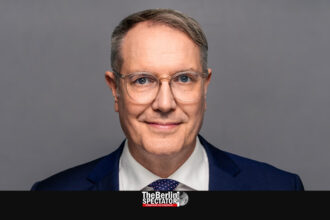
Klingbeil defended the higher borrowing on Sunday evening during an appearance on ARD’s “Sommerinterview,” pointing to the threat posed by Russian President Vladimir Putin. He argued that a balanced budget — Germany’s long-cherished “schwarze Null,” or black zero — is not a viable defense strategy against Moscow.
The budget picture has also been complicated by the fallout from the recent Iran war, which forced the government to lower its growth forecasts and, in turn, expect weaker tax revenue than previously anticipated.
To help close the gap, the plan includes a new levy on plastics and higher taxes on tobacco, alcohol, and sparkling wine, along with reduced federal subsidies to statutory pension and health insurance. Klingbeil’s ministry will also need to draw roughly €6.8 billion from a reserve fund to balance the books.
Industry representatives were quick to criticize the scale of the new spending and borrowing. Tanja Gönner, managing director of the Federation of German Industries (BDI), called the planned increases in spending and debt “alarming,” arguing that despite record tax revenue and heavy new borrowing, the government still hasn’t managed to produce a sound budget. Marie-Christine Ostermann, who heads the family business association Die Familienunternehmer, went further, accusing the coalition of raiding reserves and raising taxes instead of cutting costs, while shifting funds around through budgetary maneuvering.
“Raid on Climate Fund”
Among the most contentious elements of the draft is a cut to the Climate and Transformation Fund (KTF), a special pot used to finance a range of green initiatives. The Finance Ministry says that existing funding commitments will remain untouched, but revenue from emissions trading that would normally flow into the KTF will instead be partly redirected to help balance the general budget next year — a shift worth about 2.7 billion Euro.
The KTF finances several programs, including substantial federal subsidies for energy-efficient buildings, which help homeowners cover the cost of installing climate-friendly heating systems. The coalition had already signaled likely cuts to that subsidy program as part of its broader overhaul of Germany’s heating law, with indications that future support will be more strongly tied to income.
Mathias Middelberg, deputy leader of the conservative CDU/CSU parliamentary group, told broadcaster Deutschlandfunk that every euro in the KTF needs to be scrutinized for efficiency. Matthias Miersch, who leads the center-left SPD’s parliamentary group, was similarly blunt on ZDF’s “Morgenmagazin,” conceding that the fund has, in his words, been something of a mess in recent years, with a thicket of subsidy programs whose effectiveness was never properly assessed.
Environmental groups were far harsher. Greenpeace finance expert Mauricio Vargas accused Klingbeil of trying to loot the climate fund in order to cut income taxes for high earners, calling it a shameless misuse of funds and a scandal for a party that claims to stand for progress and social welfare. He described the move as a raid on the fund. The climate advocacy group GermanZero characterized the cuts as an open declaration of war on climate protection, while Ingbert Liebing, head of the municipal utilities association VKU, warned that the KTF risks becoming a dumping ground for savings the government has failed to find elsewhere in its core budget.
More Belt-Tightening Ahead
Klingbeil acknowledged in his ARD interview that further consolidation is unavoidable. According to the cabinet’s own figures, Germany faces a budget gap of 22 billion Euro in 2028, growing to 38 billion in 2029 and 47 billion by 2030 — a shortfall driven in large part by rapidly rising interest payments on the national debt.
To create more fiscal breathing room, the government also plans to push back the start of repayments on the special defense fund’s debt from 2031 to 2033, according to accompanying budget legislation.
The draft budget now moves to parliamentary deliberations, with the Bundestag expected to pass the final version by late November. As is customary, further changes to the government’s proposal are likely before then.