


Berlin, August 4th, 2026 (The Berlin Spectator) – Berlin police are rolling out a new AI-supported surveillance system as part of their fight against street crime. The pilot project is set to begin later this month, the city’s interior administration confirmed, after the “Berliner Morgenpost” daily first reported on the plans.
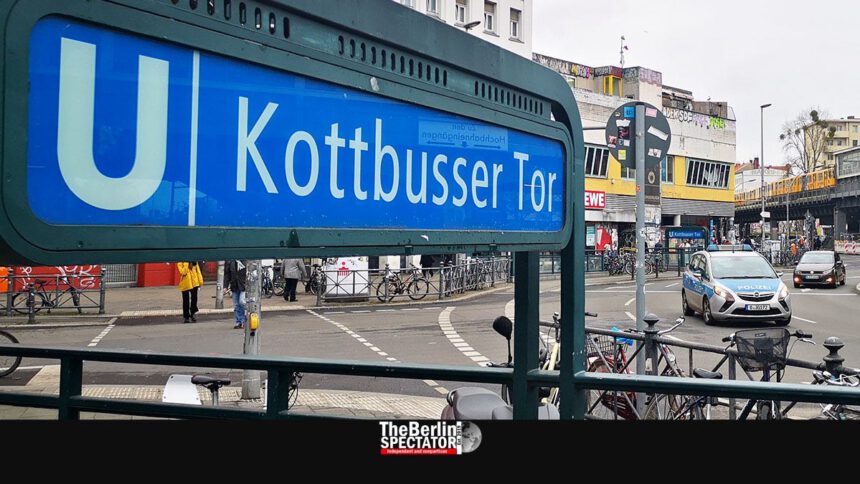
The system will initially be deployed at Kottbusser Tor, followed by Warschauer Strasse, two areas considered crime hotspots in the German capital. If the trial phase proves successful, the technology is expected to be rolled out gradually to other high-crime locations across the city.
The goal is what officials describe as “behavior and situation recognition.” Rather than identifying individuals, the AI is designed to flag unusual movement patterns caught on camera and alert officers accordingly.
Tender Process Underway
Berlin’s Interior Senator Iris Spranger emphasized that the system is not intended for surveillance or biometric identification. “The face will not be recognizable. What matters is the movement,” the Social Democratic politician explained. “When someone is being beaten up, those aren’t normal movements. The AI can identify that.”
According to Spranger, officers monitoring the footage will only see stick-figure outlines and their movements on screen. Human personnel then decide whether a situation warrants action, with the AI simply speeding up their assessment. “The AI indicates that something might be unusual. But a human decides what happens next,” Spranger said.
The AI system is also slated for use in protecting government buildings, starting with Berlin’s Red City Hall and the interior administration’s offices on Klosterstrasse. A tender process is underway, with a provider expected to be selected by the end of September. The trial there is scheduled to begin in December and run for roughly a year, according to the interior administration.
Legal Basis
Officials estimate the AI camera technology for crime hotspots will cost around 2.47 million Euro in investment and 2.13 million Euro in operating costs between 2026 and 2030. For building security, more expenses were projected.
The legal basis for the AI deployment is Berlin’s General Security and Public Order Act (ASOG), which was amended in December 2025. The plan was previously discussed in March at a meeting of the Berlin House of Representatives’ interior committee, where the possibility of using AI to protect the parliament building itself was also raised. That idea has since been dropped following objections from lawmakers.