

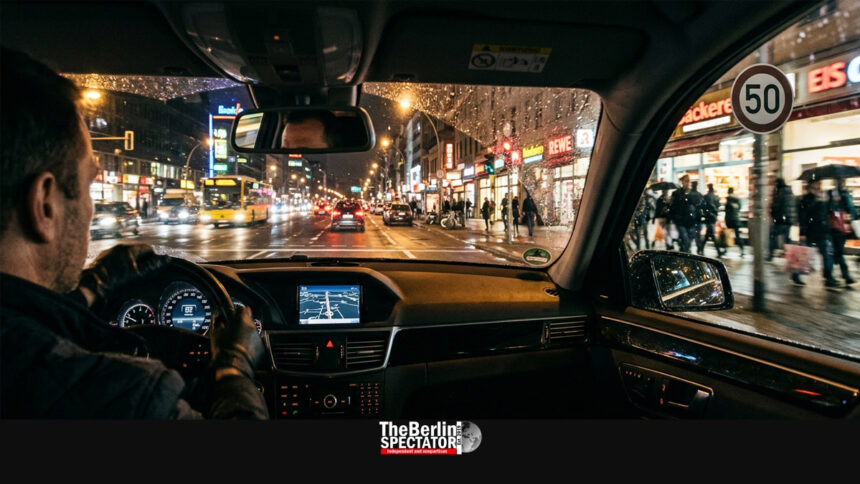
Berlin, October 24th, 2026 (The Berlin Spectator) – At Kurfürstendamm in Berlin’s Charlottenburg borough, posers race by all the time, especially on weekends. They are mostly young and male contemporaries who want to let everyone in the city know how gifted they are by renting Ferraris, Lambos, American muscle cars or powerful BMWs and driving them up and down the boulevard.
By kicking the accelerator a bit too much, they achieve two things: The eight-cylinder engines under the hood will create a lot of noise, which they love, but everyone else doesn’t. Also, they will reach high speeds. Oh yes, they love speeding too. Since they admire themselves for racing through Berlin, everyone else will do so too, right?
But posers are not the only ones speeding in this city. The woman who is late for work can become a speedster without really wanting to. So can the student who badly needs a Big Tasty burger since he has not eaten in at least ten minutes or the clan gangster boss who just loves to use the kickdown in his S-Class Maybach edition.
Speed Traps
Long story short: Far too many motorists in Berlin ignore the speed limits that vary between 30 and 60 km/h (19 and 37 mph). On the city Autobahnen (plural of Autobahn), up to 80 km/h (50 mph) is the limit. Last year alone, the police registered and fined more than 1.1 million speedsters. Imagine how many there are who do not get caught.
To catch offenders, Berlin follows different approaches: on the city highway, they follow drivers in unmarked vehicles equipped with video cameras and speed measuring devices. At intersections, they have stationary speed traps that also take pictures of motorists who ignore red lights. On city streets, the cops also use mobile speed traps. They are installed in gray trailers and in the backs of Volkswagen Caddy vans.
According to the Berlin Police Department, the number of speedsters caught in the act varies. In the past ten years, the lowest number of speeding offenses registered was 717.900 (2017), the highest 1.2 million (2019).
800 Euro Fine
In 2026, the police caught roughly 666,000 motorists who sped through Berlin so far. Therefore, 2026 will probably not be a record year.
Most speedsters go up to 15 km/h too fast. Many exceeded the speed limits by up to 25 km/h. Thousands drive even faster. In 2025, exactly 127 motorists were more than 70 km/h faster than allowed. In cases of this kind, offenders have to pay at least 800 Euro. They also lose their driving licenses for a while.
Speeding endangers pedestrians as well as car occupants. Fining them will hopefully decrease the number of offenses. At the same time, it helps Berlin financially. The city state collects more than 30 million Euro from them on an annual basis.