
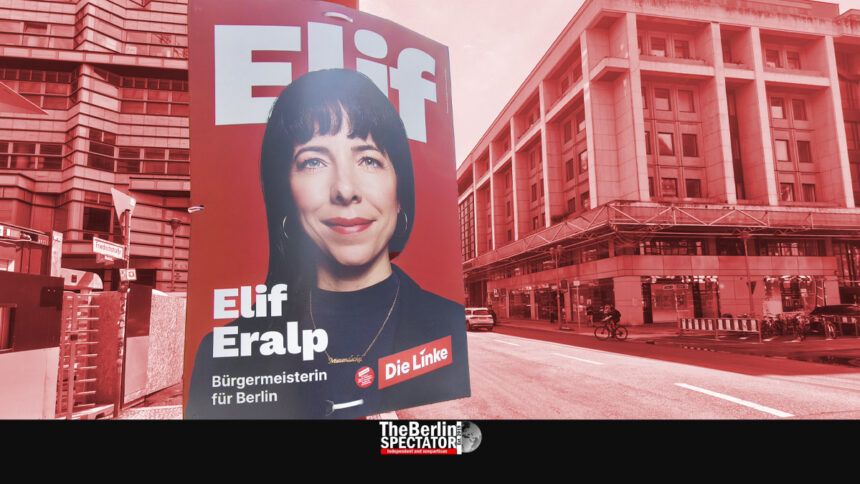
Berlin, September 21st, 2026 (The Berlin Spectator) – In both Berlin and Mecklenburg-Hither Pomerania (MV is the German abbreviation for this federal state), extremist parties won state elections on Sunday. Up north in MV, the far-right AfD won with a share of 38.2 percent of the votes. The center-left SPD ended up with 35.5 percent. In Berlin, the far-left “Die Linke” (“The Left”) was victorious. It got 25.7 percent, while the center-right CDU’s share is 18.8 percent (see the complete results below).
Whether the election winners will actually govern their states is unclear at this stage. In MV, the extremist right-wing AfD may be the strongest party, but it does not have a majority. Since the extremist left-wing BSW did not make the five-percent hurdle, the state parliament will not include any potential backer for the self-proclaimed “Alternative for Germany”.
This means the SPD might govern with the Greens and “Die Linke”. This is the most likely outcome. Minister President (governor) Manuela Schwesig of the SPD could remain in office even though the AfD is stronger than her own party.
Two Possible Coalitions
In the federal city state of Berlin, there are two possible coalitions: The election winner “Die Linke” could form a coalition with the SPD and the Greens, two center-left parties. The less likely option is a government consisting of the conservative CDU with the SPD and the Greens. Werner Graf, the main candidate for the Greens, has stated he would rather work with “Die Linke”.
While the SPD turned out to be stronger than expected in MV, it got crushed in Berlin. So far, its main candidate Steffen Krach has not said whether he wants a coalition with “Die Linke” and the Greens, or with the CDU and the Greens.
Berlin
Time: September 21st, 5:17 a.m. (final result)
CDU (center-right): 18.8
SPD (center-left): 12.1
Die Linke (extremist far-left): 25.7
The Greens (center-left): 14.3
AfD (extremist far-right): 16.3
BSW (extremist left-wing): 4.7
Mecklenburg-Hither Pomerania
Time: September 21st, 5:18 a.m. (final result)
CDU (center-right): 4.9
SPD (center-left): 35.5
Die Linke (extremist far-left): 6.5
The Greens (center-left): 5.7
AfD (extremist far-right): 38.2
BSW (extremist left-wing): 4.8
Jewish Organization Warns Parties
Both election winners, the AfD and “Die Linke”, harbor extremists. The AfD in Germany is known for supporting Russia’s President Vladimir Putin, who is fighting a war of aggression against Ukraine. Some of the AfD’s leaders and some of its members of both the Bundestag and state parliaments are known for racist remarks, including some borrowed from those who ruled Nazi Germany, the democratic Federal Republic’s predecessor state. Critics accuse the AfD of racism. On top of it all, the party wants Germany to leave the European Union and NATO. The latest major nepotism scandal the AfD was rocked by did not stop people from voting for this party either.
“Die Linke” in Berlin is known for antisemitism scandals. During the latest election campaign, members celebrated the Palestinian terrorism against Israel and called for more of it. The Left’s main candidate Elif Eralp reacted by saying she was appalled, but no steps against antisemitic hatred in her party were taken.
Now, after the state election in Berlin, the Central Council of Jews in Germany warned against including “Die Linke” in Berlin’s next government. The organization’s President Josef Schuster appealed to the Greens and the SPD not to form a coalition government with the party. Its latest scandals had damaged its credibility in the fight against Jew hatred. Instead of fighting antisemitism, this kind of hatred was tolerated in parts of “Die Linke”, Schuster said.
Catastrophe for the CDU
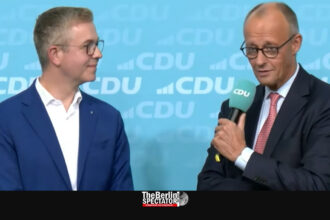
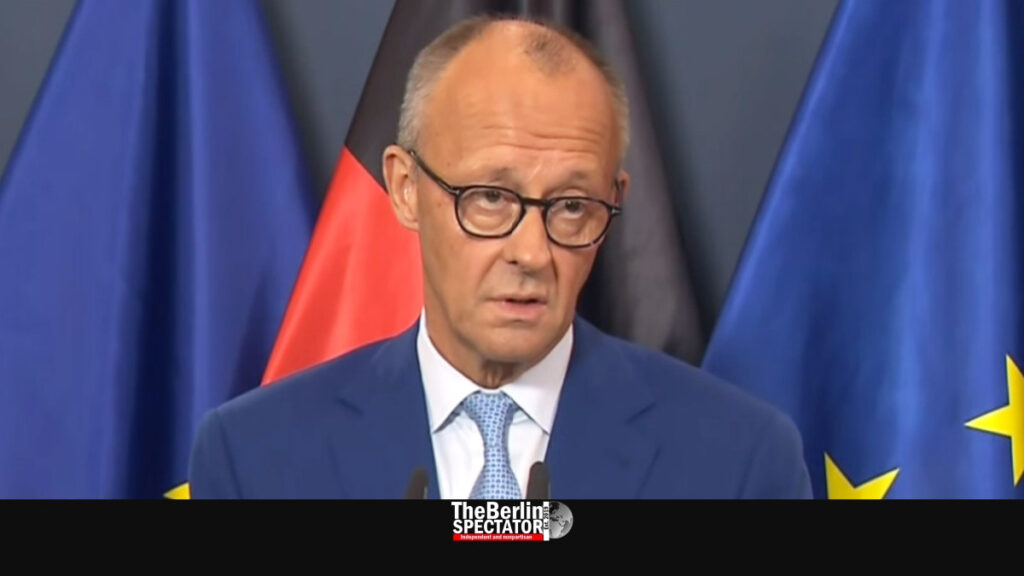
For German Chancellor Friedrich Merz’ CDU, yesterday’s election day was nothing less than a catastrophe. In MV, it got its worst state election result ever and did not even make it into the state parliament. Some observers had expected Merz to step down. But on Sunday, just after the polling stations closed, the Chancellor appeared on television, saying he wanted to “advance our country”. The pressure on him could increase further.