


Berlin, June 8th, 2020, updated September 24th, 2026 (The Berlin Spectator) — The German version of Oranienburg’s official tourist website does convey the message in words anyone will understand: “The Palace Park is Oranienburg’s largest garden and worth a visit in almost any kind kind of weather.” A third-grader would have gotten a B+ for this kind of essay.
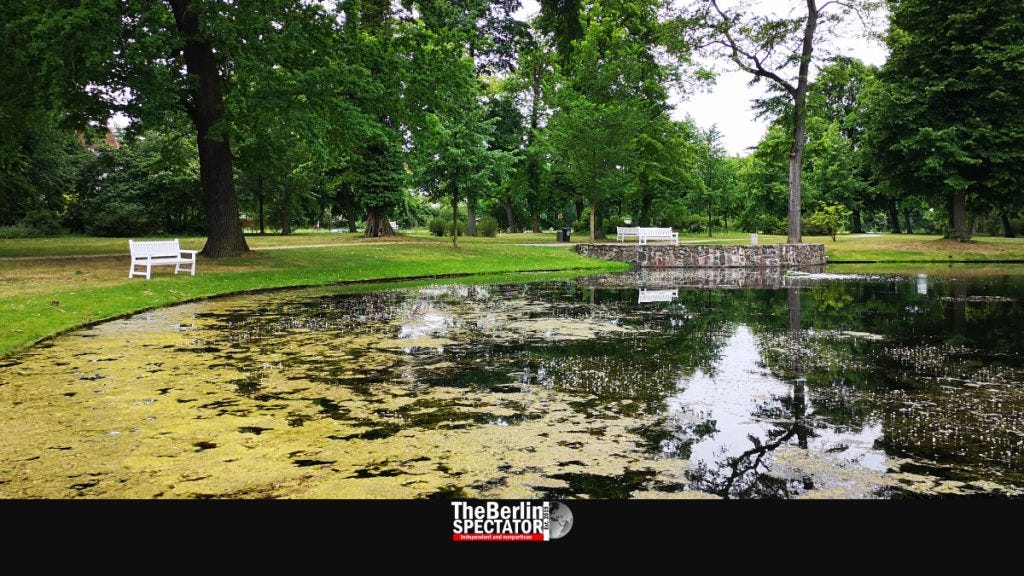
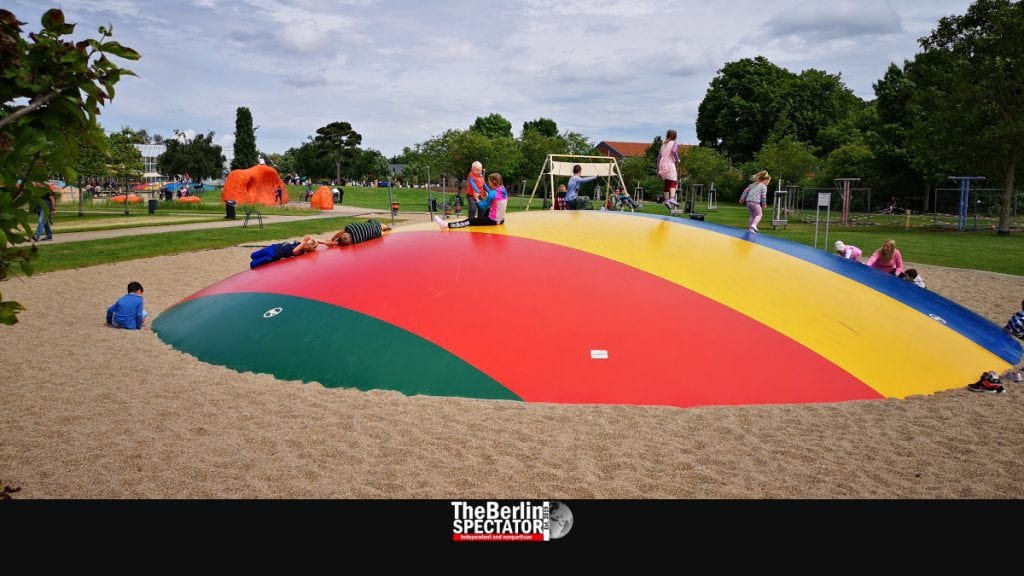
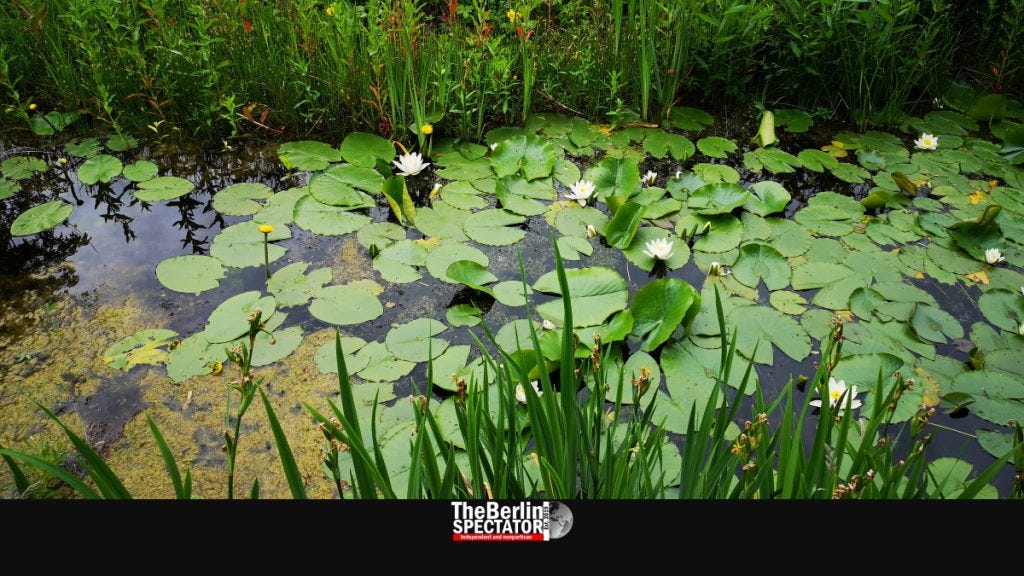
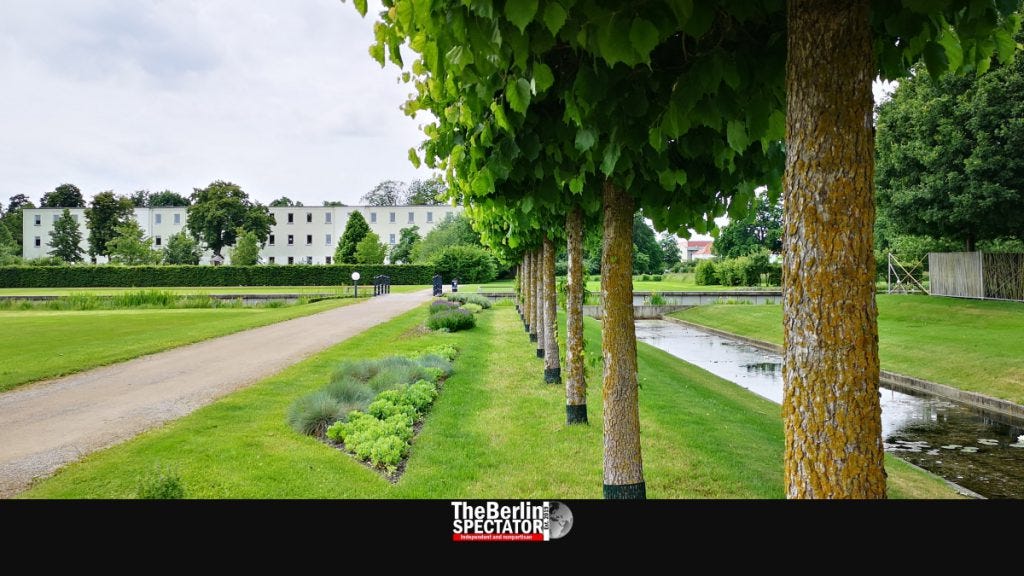
But they are right. The park is one of Oranienburg’s highlights. It offers quietude and things to see for visitors who like frogs, flowers and forests, as well as a giant playground for children of all ages. They can run, climb or play with a blue whale that features a spout. There even is a wooden fairy tale house.
While the little ones play, parents and grandparents can sit in the Castle Garden Café to have a strawberry cake or a chilled lemonade and ask themselves what exactly Oranienburg has to do with radioactivity. The 6 Euro for a ticket (4 Euro for children) are definitely worth it.
But let’s start from the beginning. Some 900 years ago, a Slavic settlement was set up where Oranienburg is located today. At some point, a town which developed right there at the Havel river was known as Bötzow. In 1650, Frederick William, the Elector of Brandenburg, felt like giving his wife, Countess Luise Henriette von Oranien, a nice present. Bötzow was his choice.
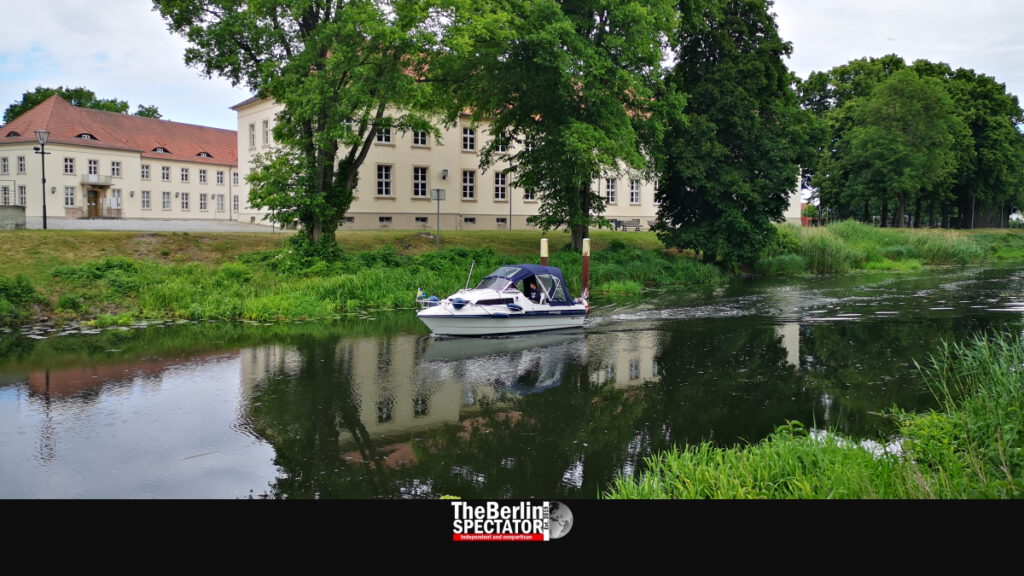
‘Palace Port’ Yachts
Two years later, the couple had a palace erected: Oranienburg Palace. The rest is history. We are bypassing a few hundred years of history here, hoping nobody will notice. Theodor Fontane, one of Germany’s most important novelists and poets, would have noticed, since he wrote about the history of this place in his book “Walks through the March of Brandenburg” in the late 19th century, when there was no radioactivity yet.
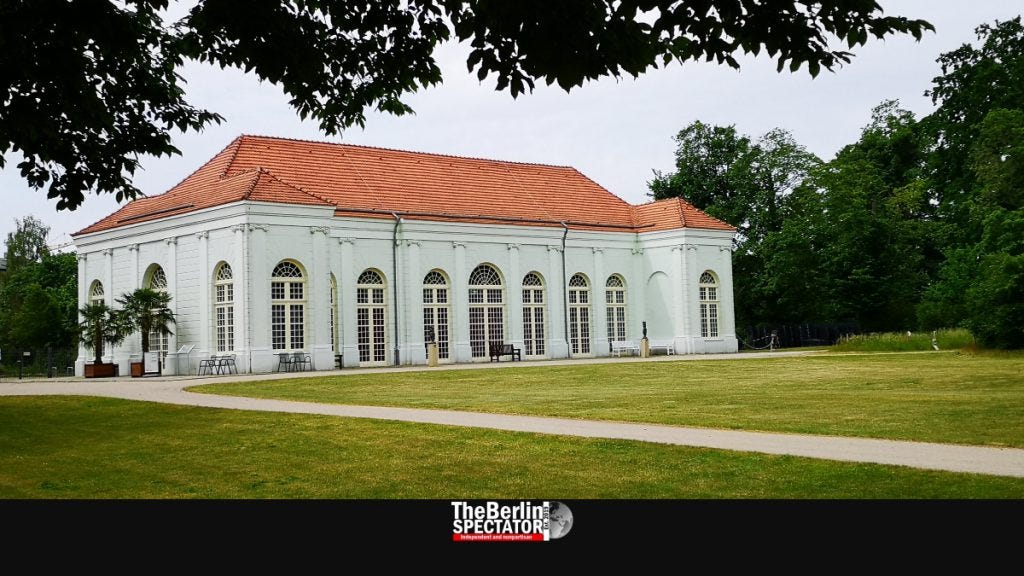
Today, Oranienburg Palace features art from the 17th century and an exhibition about the county it is located in, namely Oberhavel. It is the oldest Baroque palace in the Margraviate of Brandenburg. And it is radioactive, like everything in Oranienburg.
Some 1.9 million visitors come to Oranienburg every year. They arrive by the S-Bahn city train from Berlin, by regional trains, by car, bicycle and yachts. Well, Oranienburg may not be Monaco, but quite a few very elegant boats are parked at the nice Schlosshafen (Palace Port). Obviously, this still doesn’t explain the radioactivity part.
The Best Scene
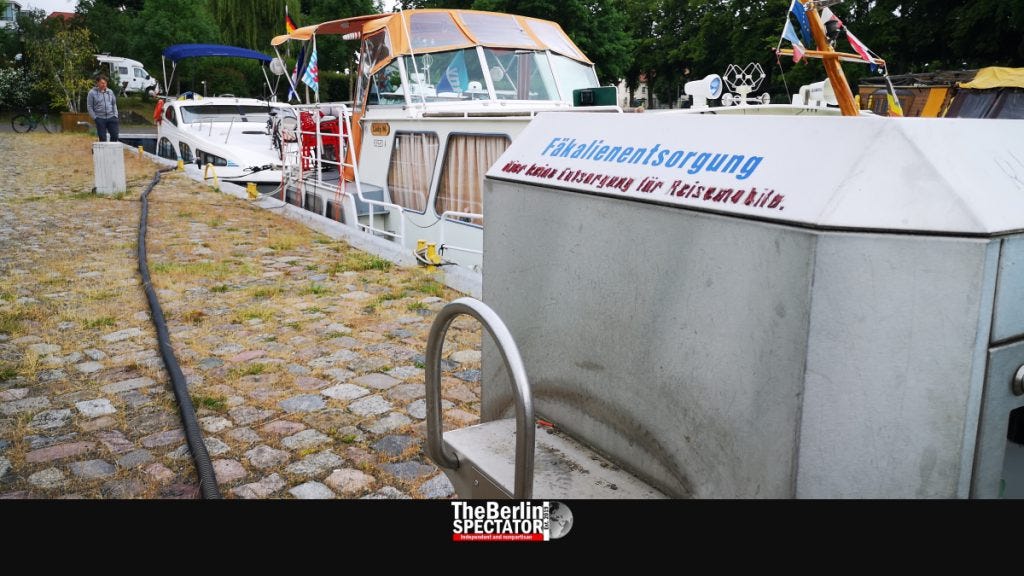
On a cloudy Sunday, motorhome owners from the neighboring “motor caravan parking lot” are watching the best scene of the morning: The owner of one of those impressive yachts deals with a hose that connects his boat to a sucking machine. The latter empties the yacht’s wastewater tanks and causes a smell one could have lived without, right at this posh spot.
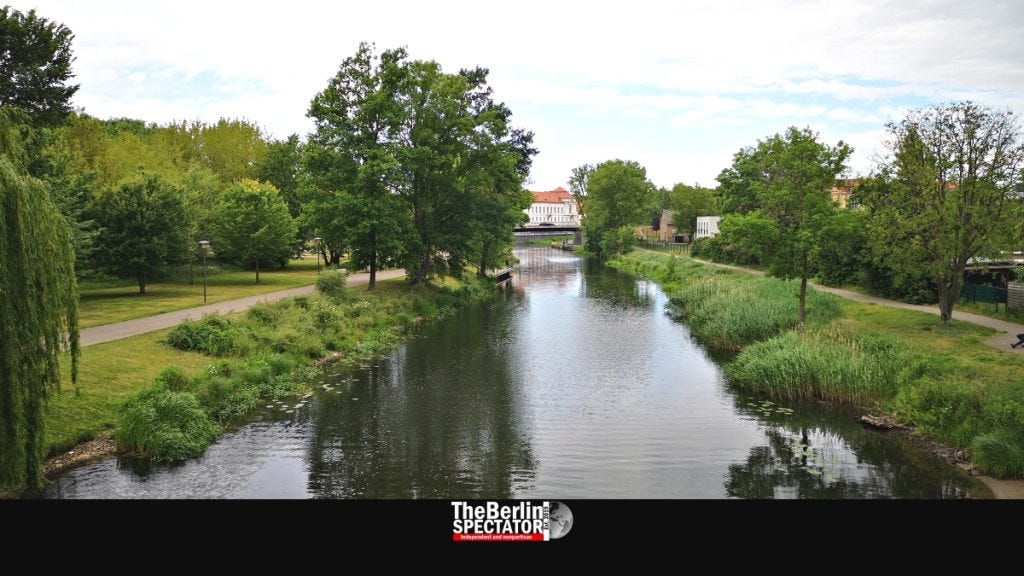
At several locations in Oranienburg, along the Havel river and the Oder Havel Canal, little marinas for yachts can be found. By the way: There are houseboat rentals in the region, for those who do not have the change they need for their own yacht. In Oranienburg, its all about water. And radioactivity. The canal was built from 1906 until 1912, and it did have a positive effect on Oranienburg’s economy.
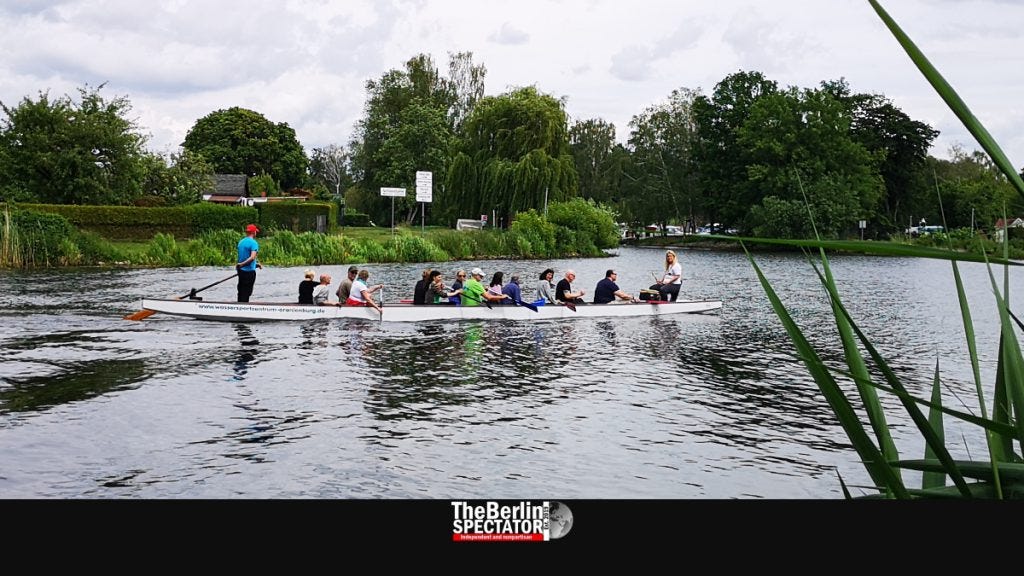
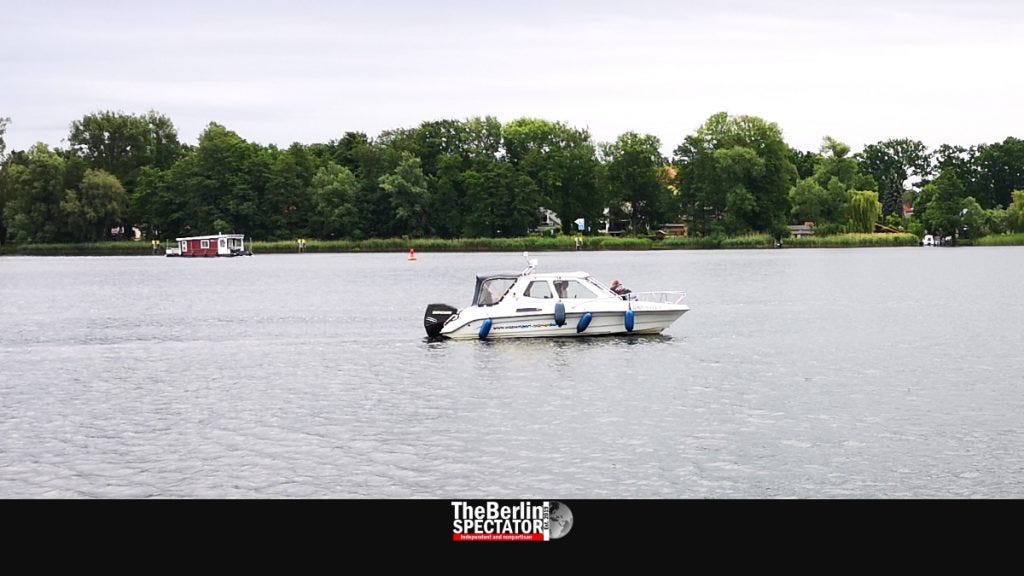
The Lehnitzsee, a big lake on the town’s eastern end, is connected to the river. Here, a rowing boat with 14 people who are propelling their means of transport with paddles, and one lady setting the rhythm with a drum as if she was on a Roman galley, is moving from the Havel to the lake. At the same moment, a slow houseboat which looks like a floating shoe box is heading in the other direction. On the opposite lakeshore, people can cool down at a small bathing beach during the summer months.
Natural Freshness
Before we finally get to the radioactivity, there is another dark chapter: The Nazi concentration camp Sachsenhausen is located on Oranienburg’s turf. From 1936 to 1945, tens of thousands of inmates were murdered here, among them Jews, POWs, political prisoners, homosexuals and Jehova’s Witnesses.
The site is a memorial and museum today. “Arbeit macht frei” (“Work brings freedom”) it says on the gate, just like in Auschwitz.
We finally made it to the part about radioactivity. Oranienburg is actually the most radioactive place in all of Germany. The company Auergesellschaft had a factory here when the Nazis came into power in Berlin, 33 kilometers (20 miles) away. Two Jewish shareholders were kicked out of the company. In the early 1940s, it actually produced a product called Doramad, a radioactive toothpaste which was supposed to make consumers feel “natural freshness” in their mouths, according to ads. This is not a joke.
Secret Bomb Project
It gets worse: Dictator Adolf Hitler had a secret bomb project which involved uranium, and therefore radioactivity. They worked on it at the Auerwerke factory in Oranienburg. Once the Allies got wind of it, they stopped his plans. On March 15th, 1945, hundreds of American planes dropped countless bombs with a combined weight of more than 1,500 tons.
Not only did they completely flatten the Auerwerke factory in Oranienburg and other areas in town, but they also spread the radioactive material the Nazis were using. For that reason, the town is more radioactive than any other location in Germany, even today.
The Look
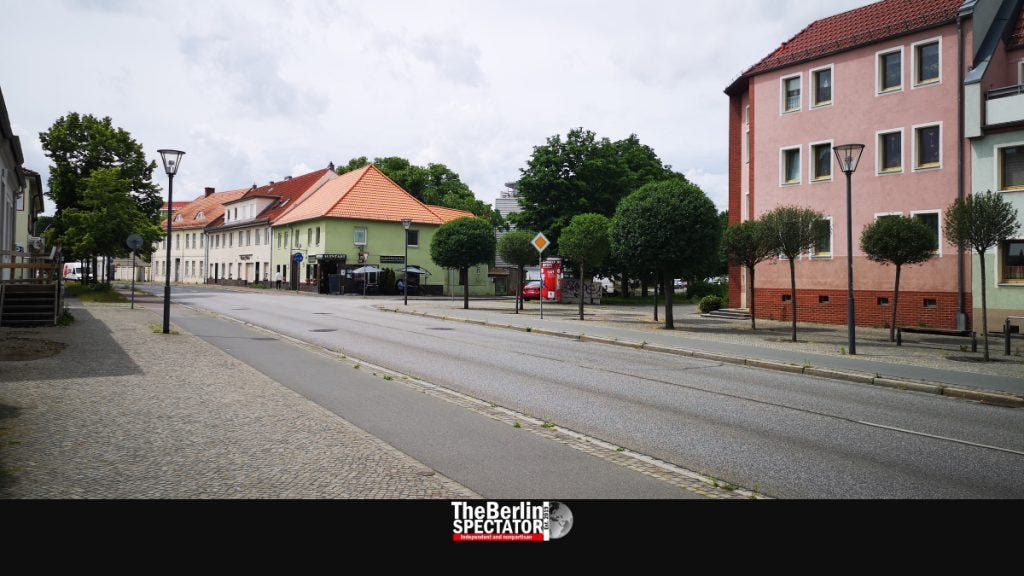
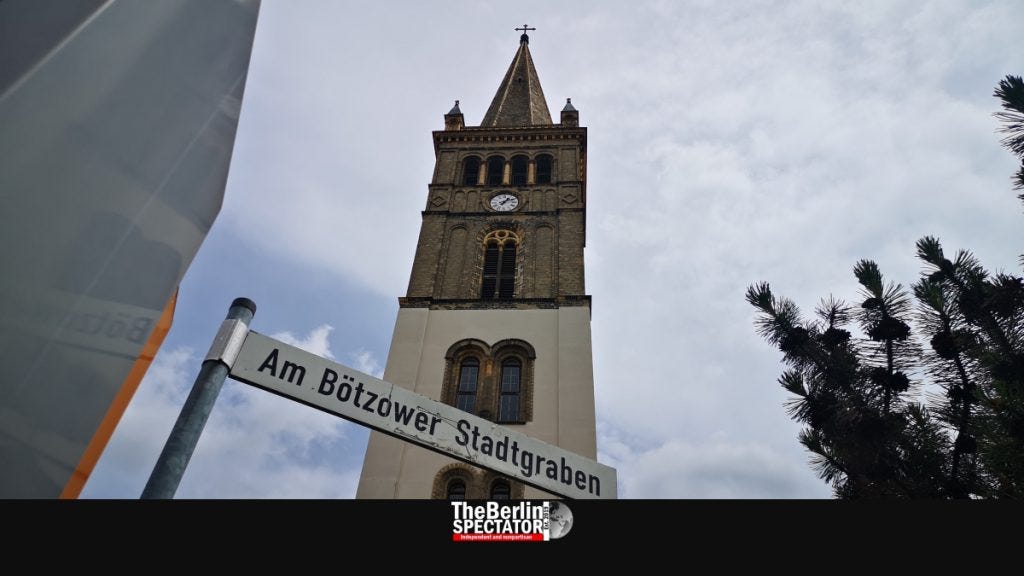
Because of the bombings, the center of Oranienburg, a town of 44,500 inhabitants, looks the way it looks. No medieval or particularly old buildings are left. This aspect and the GDR’s usual approach did not exactly affect Oranienburg’s beauty in a positive way.
Oranienburg may be the most radioactive day trip destination from the perspective of Berlin, but it is still a good one. Grab the kids, hop on a train and go there on a nice day. The little ones will love the park with its giant playground.
By the way: Wastewater pumped out of expensive yachts does smell, but radioactivity does not.