

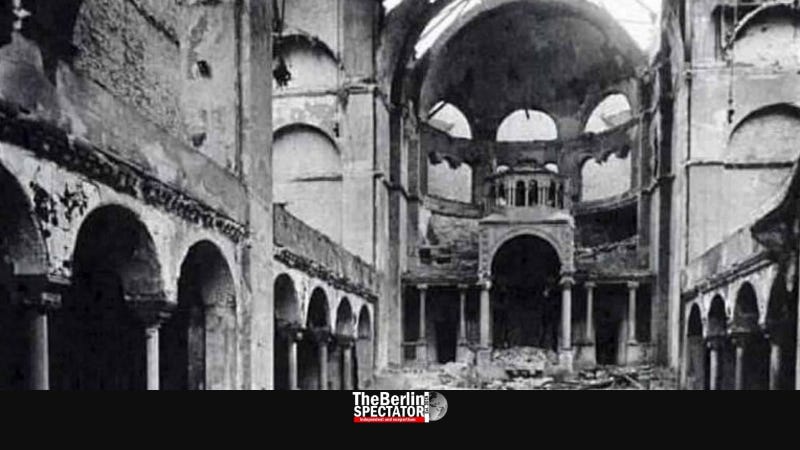
Berlin, November 9th, 2026 (The Berlin Spectator) – “All of a sudden, the winter sky above Berlin was blood-red”, Ernst Marcus wrote on December 4th, 1945. His account of the events during the November Pogroms that took place on November 9th and 10th, 1938, is part of the archive at Yad Vashem, the official memorial to the victims of the Holocaust in Israel.
The news that even the “unremarkable private synagogue in the neighborhood” had been set on fire had reached him that morning. He was also told that the police and fire brigade were just watching, without trying to extinguish the flames.
Ernst Marcus worked for the Paltreu Trust, which helped Jews emigrating from Germany to Palestine. He immediately took a taxi to his office in Potsdamer Strasse. On the way he saw “flames and smoke in many streets, broken and plundered stores in the elegant quarter around Kurfürstendamm”. This kind of sight had been “unfamiliar, even during the revolutionary times in Berlin in the years 1918 and 1919”, he wrote.
Once he was at his desk, Ernst Marcus, who was then 38 years old, received several phone calls. Upset colleagues told him there was hardly any contact to the Nazi government and asked him to try to talk to people at the Reich’s Foreign Ministry.
SA and SS
“Because of the so-called ‘spontaneous’ activities by Hitler’s Schutzstaffel and Sturmabteilung [SS and SA]”, which in fact had been ordered by Joseph Goebbels himself, “any events with unforeseeable consequences could have taken place at any moment”, Ernst Marcus wrote. “When I hurried down the stairs […] I knew my life was in danger, but this aspect only strengthened my resolve.”
At Hitler’s Foreign Ministry, Ernst Marcus knew one diplomat he trusted. His name was Werner Otto von Hentig. In order to make sure he would not be arrested by the Gestapo before reaching the ministry, the lawyer decided to announce his visit by calling von Hentig’s office from a payphone.
On the way to the ministry, Ernst Marcus saw “smoke and destruction” and “people standing in front of affected buildings”. According to him, the inhabitants of Berlin “had never seen this kind of brutal abuse of people and the anarchic destruction of tangibles under the protection of, and ordered by, the government. They were stunned and took note of the new developments.”
Diplomat Appalled
“Sure, the mob helped looting places, but a large majority of Berliners seemed to know who would pay for this one day”, Ernst Marcus wrote.
It might be hard to believe, but at least one diplomat employed by Hitler’s Foreign Ministry, Werner Otto von Hentig, was appalled. “Without paying attention to the SS officers who were promenading up and down the [ministry’s] corridors he shouted: ‘Doctor, what a disgrace! Those murderers! Those criminals!’ I had trouble calming him down.”
In Ernst Marcus’ account it says von Hentig had been surrounded by “young attachés” that morning who condemned the attacks as well. “I am embarrassed by my people”, Werner Otto von Hentig said on November 10th, 1938.
Thwarting Goebbels’ Plans
According to Marcus, the Gestapo and the ministry knew about von Hentig’s political opinions. But they needed an experienced diplomat like him who was an Orient expert and spoke important languages. So, they did not persecute him.
That same morning, von Hentig agreed with Ernst Marcus that a march of Jewish men, escorted by the SA, which Goebbels was planning, had to be prevented. So, the diplomat called a colleague, but he did not want to get involved. Von Hentig tried to convince other colleagues, without success.
After his talks at the Foreign Ministry, Ernst Marcus headed to the National Representative Agency of German Jews, only to discover that its office had already been raided by the Gestapo. “I almost fell into their hands too.”
March Canceled
Another aspect which might be surprising is the fact that Goebbels’ march through Berlin was indeed canceled, due to the intervention of Werner Otto von Hentig, who had managed to speak to some other people in high positions after all. On top of that, “individual uncoordinated looting and random violence were prohibited by the Nazi leadership, not because they wished to protect Jews, but to maintain state control, protect non-Jewish property, and funnel stolen wealth directly into the state’s hands”, according to Yad Vashem.
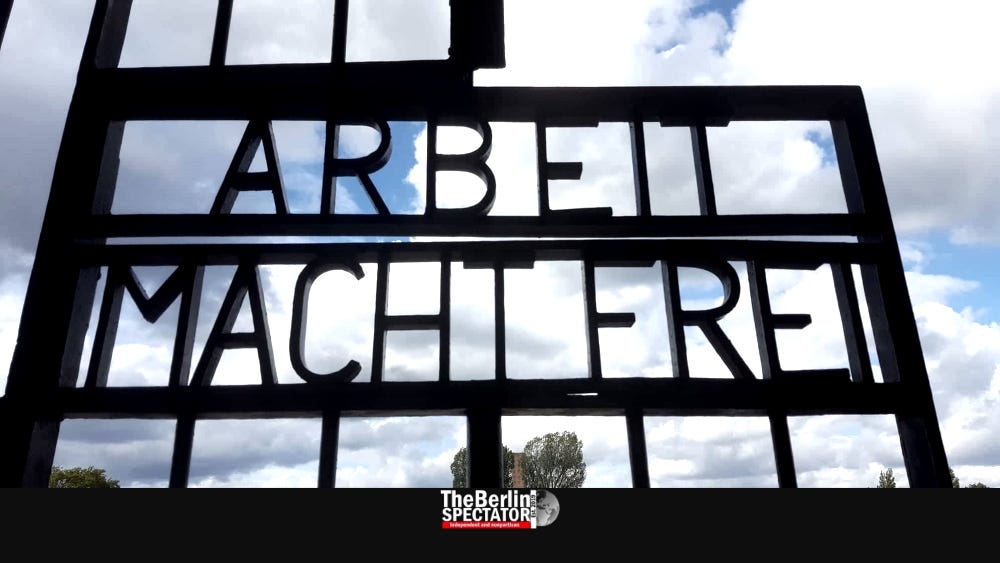
Ernst Marcus was arrested by the Gestapo only days after those events he described. He was taken to the Sachsenhausen concentration camp, where he stayed for only five days. Werner Otto von Hentig managed to get him out of there. The two friends used their influence to get other Jews out as well.
A few weeks later, Ernst Marcus and his wife Irene left Nazi Germany and settled in what was then Palestine. After the war and their divorce, he returned to Germany, where he became Executive Director of the Hamburg Symphony Orchestra.
Discrimination Turned into Murder
In November of 1938, hundreds of Jews were murdered in Germany. Thousands of businesses and apartments owned by them were looted and destroyed. Over 1,400 synagogues and other Jewish facilities were burned down while tens of thousands of Jews were brought to concentration camps. This was the time when the discrimination against Jews turned into their murder.
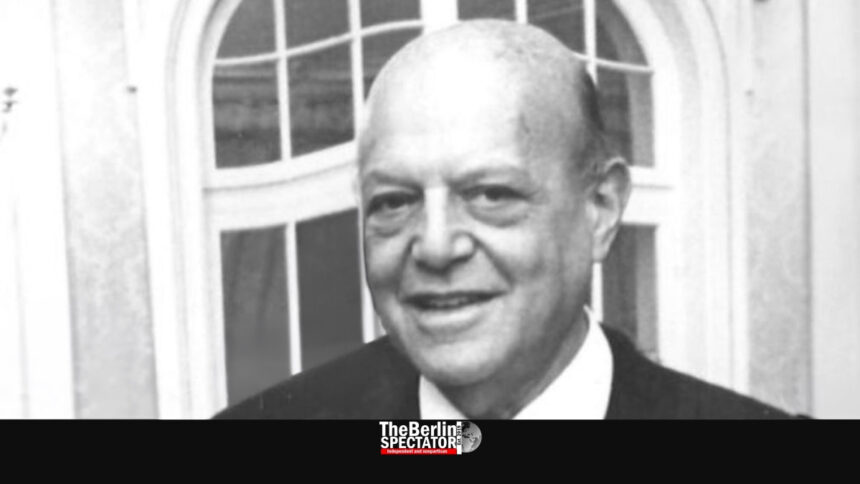
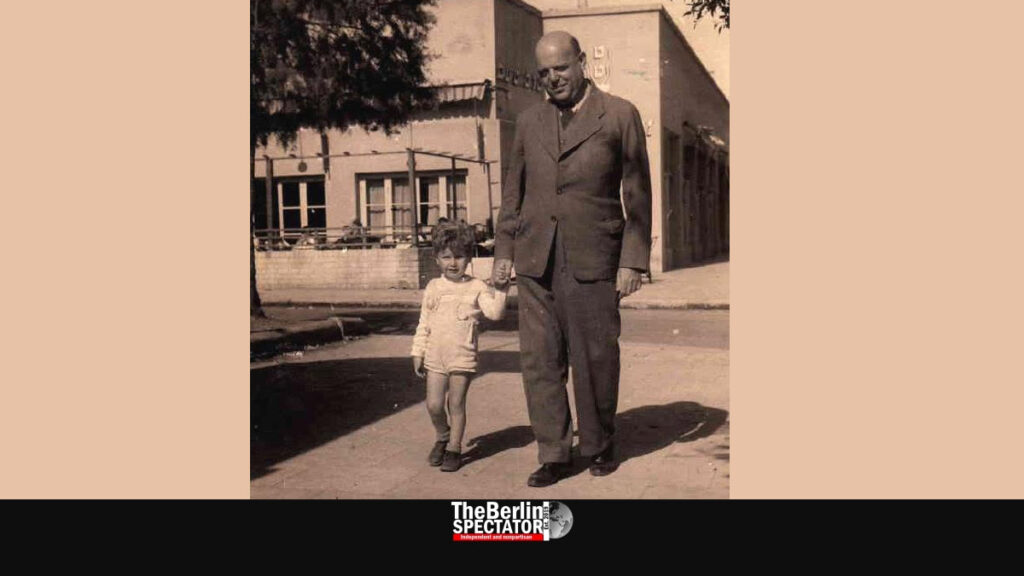
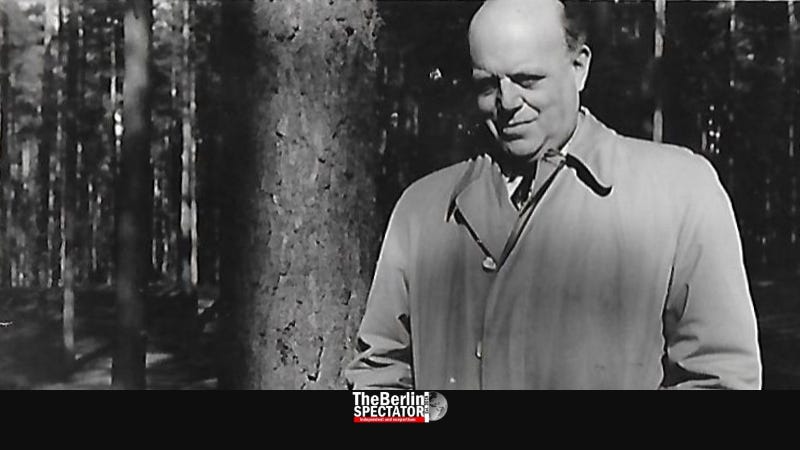
Ernst Marcus (1900-1973) was the author’s grandfather. According to files from the Russian State Military Archive and his own account, he was in the Sachsenhausen concentration camp from November 13th until November 18th, 1938, for being a Jew. Thanks to his diplomat friend, he was granted a temporary release which was turned into a discharge on December 2nd, 1938. Ernst Marcus lived in Haifa until he moved back to Germany. In the early 1950s, he settled in Hamburg.
Ernst Marcus’ complete account of the November Pogroms (in German and Hebrew) can be found here (Yad Vashem).
An earlier version of this article was published on The Berlin Spectator on November 9th, 2019.