


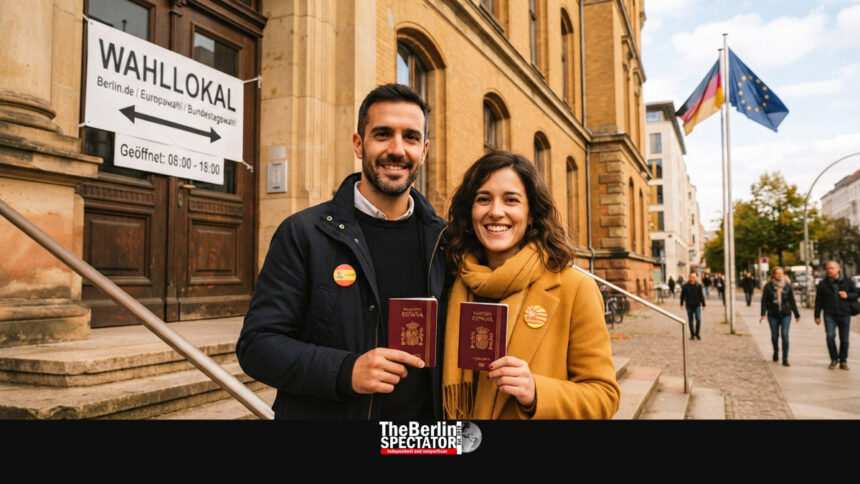
Berlin, August 23rd, 2026 (The Berlin Spectator) – Foreign nationals living in Berlin sometimes assume they have no say in local politics. For citizens of European Union member states, that is not entirely true. While the Abgeordnetenhaus, Berlin’s state parliament, is elected only by German citizens, EU citizens are allowed to help choose the members of their district assembly, known as the Bezirksverordnetenversammlung (BVV). Both elections take place on the same day, September 20th.
Here is what EU citizens need to know before heading to the polls, or before wondering why they have not received their voting notification yet.
Who Qualifies
Several conditions need to be met. First, voters need to hold the citizenship of an EU member state. Second, they need to be at least 16 years old, since Berlin lowered the voting age for these elections. Third, they need to have had their primary residence in Berlin, or otherwise habitually stayed in the city, for at least three months before election day. In practical terms, that means being registered in Berlin no later than June 20th, 2026.
Voters do not need to apply separately to take part. Anyone who meets the above conditions is automatically added to the electoral register for their district’s BVV election.
Does The Berlin Spectator have a newsletter? Sure. You can subscribe here.
What To Expect By Mail
Eligible EU citizens should receive an official voting notification by August 30th, 2026, at the latest, by snail mail. It states the address of the designated polling station along with additional information about the district assembly election. Anyone who has not received this notification by then, particularly those who moved to Berlin recently or changed addresses within the city, should contact their district’s election office (Bezirkswahlamt) directly.
At The Polls
On election day, voters must bring a valid photo ID, either a passport or another official document with a photograph, to their polling station. Only the voter named on the notification is permitted to cast that ballot. Voting on someone else’s behalf is not allowed.
One Vote, Not Two
There is an important distinction to keep in mind. German citizens cast several ballots on September 20th: two for the Abgeordnetenhaus (one for a constituency candidate, one for a party list) and one more for their district assembly. EU citizens who are not German nationals only receive the district assembly ballot. The state parliament election remains closed to non-German citizens.
Questions about individual cases are best directed to the relevant Bezirkswahlamt, since local election offices handle registration details and can look up individual voter records.