

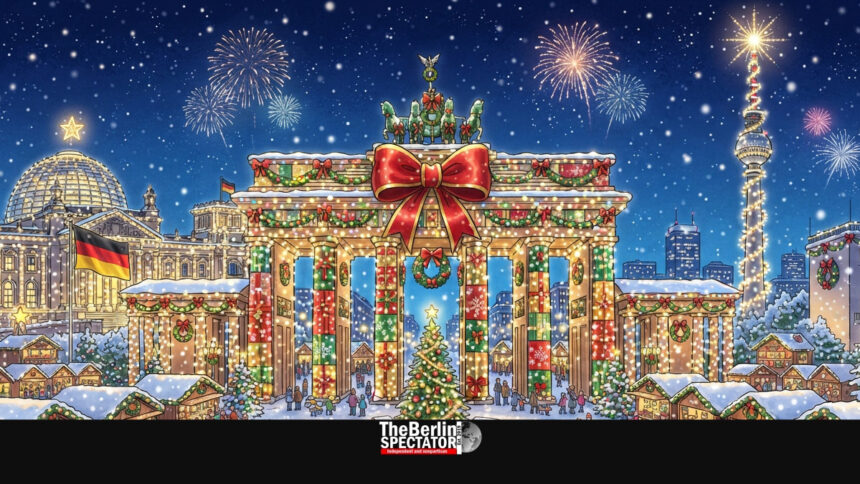
Berlin, November 29th, 2026 (The Berlin Spectator) — It all commences with Christmas products in supermarkets. Typically, they can be found starting in September. Sure, they are exaggerating, but who cares? Soon they might offer Christmas cookies in spring. So what? In November, the rat race for presents begins. On December 24th, the typical family will sit around the dining table. But we are getting ahead of ourselves here. Let’s slow down and rewind back to the beginning.
Ahead of Christmas, getting colorful Advent calendars (“Adventskalender”) for kids is mandatory. They are made of cardboard and plastic and have 24 little doors, one for each day from December 1st to 24th. Little chocolate treats are hidden behind those. Just make sure the chocolate is not consumed before it is supposed to. Advent calendars were invented by German Lutherans.
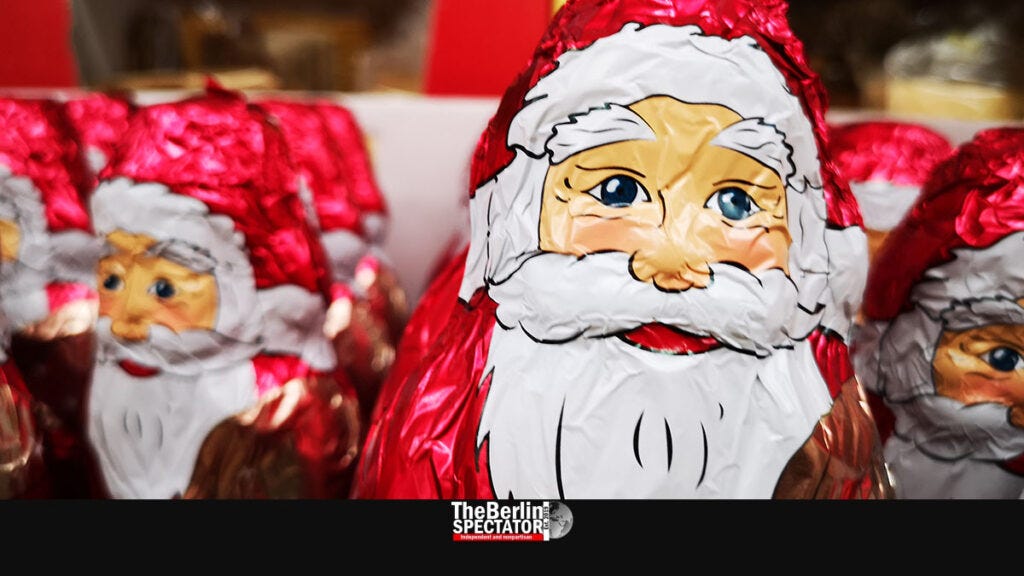
Those spiced cookies (“Spekulatius”) and gingerbread cookies (“Lebkuchen”) Germans love so much are addictive indeed. The same applies to various kinds of chocolate-coated cookies that are popping up in those supermarket shelves as we speak. More healthy items, such as nuts and tangerines, are usually part of the deal as well.
Self-Made Cookies
Who could resist Christstollen? Obviously nobody. But do pick the right kind. First of all, cheap Stollen is usually not too convincing. Secondly, “Marzipanstollen” and “Mandelstollen” can have a very intense taste. “Butterstollen” and “Dresdner Stollen” are probably the most popular kinds. Any kind of Christstollen should be cut into slices and consumed with butter.
In late November and early December, one of the most important activities is baking cookies and decorating them, for instance with tiny chocolate chips. The dough used in Germany mostly tastes a little too good, which is why half of it is usually gone by the time it is supposed to be rolled and cut.
Trees and Candles
What is next? The Advent. The four Sundays leading up to Christmas are the Advent days. This year, today is the first one. Most Germans have Advent wreaths with four candles. On the first Advent, one of those will be lit. By the fourth advent, it is all of them. Those wreaths are made of fir branches that easily catch fire. Preparing a bucket of water or a fire extinguisher is recommended, also because of the danger the tree can pose.
Most Germans dislike artificial Christmas trees made of plastic. They would rather pay 30 to 40 Euro for a real one. In late November and December, they are being sold at intersections in all German towns and cities. The tree requires candles, or safer kinds of lights, and decoration. Some 30 million Christmas trees per year are being sold in Germany.
By the way: Let’s not forget the Christmas market, yet another German invention. This tradition has spread to locations around the world in the past 20 years.
Dinner, Presents and Church
In Germany, Christmas Eve is a stressful day. People’s activities include preparing the presents and the dinner. Hardly anyone follows the ancient fasting tradition anymore. The fish and the potato salad many Germans eat on Christmas Eve sort of symbolize the fasting. By the time the last piece of potato is gone, some children will already be playing with their new toys, but the distribution of presents usually takes place after dinner. Patience is a good virtue here.
Many practicing Christians like to go to Christmas services. They usually start at midnight. Especially in the far more religious south of Germany, there will be Christmas services at churches in every single village.
‘Merry Christmas’ vs. ‘Happy Holidays’
Then, on December 25th, the first of two Christmas Days, geese with potato dumplings and other delicious meals are eaten all over Germany. By the time Christmas is over on December 27th, when the relatives go home, nobody will fit into their clothes anymore. But this, of course, is not limited to Germany. Both December 25th and 26th are official holidays. Will supermarkets be open? No. This is Germany, remember?
In December, most Germans wish each other “fröhliche Weihnachten“, “merry Christmas”, no matter whether they are talking to Christians, Jews, Muslims, Hindus or Buddhists. Trying to do it like the Americans might actually be a better idea. They usually wish people “happy holidays”, to be on the safe side.
By the way: Hanukkah commences on December 4th this year.