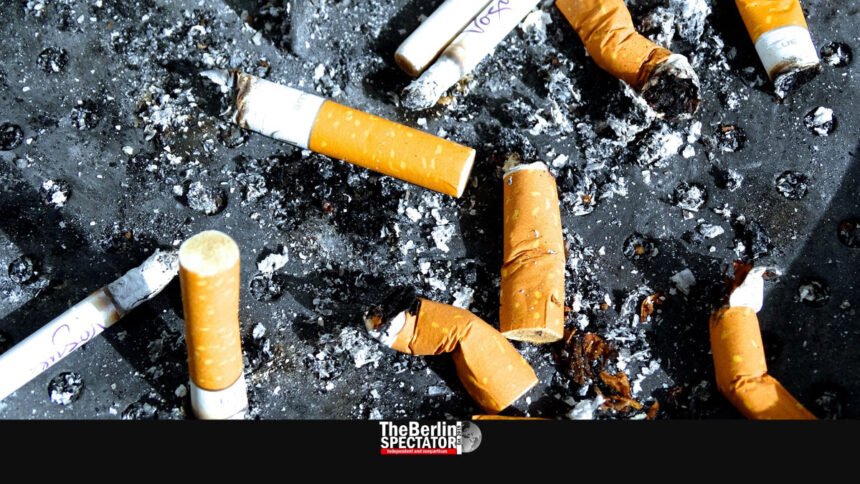
Berlin, July 14th, 2026 (The Berlin Spectator) – Germany’s governing coalition of Christian Democrats (CDU) and Social Democrats (SPD) is preparing to push cigarette taxes up further than what the federal cabinet approved just a week ago, according to a report by Redaktionsnetzwerk Deutschland (RND), which cited an internal drafting document from the Finance Ministry intended for coalition lawmakers.
Under the revised plan, the average price of a pack of cigarettes would climb gradually from roughly 8 Euro today to nearly 11.80 Euro by 2030, about 40 cents more than the figure the cabinet had signed off on the previous week. Sources within the coalition stated that government lawmakers had decided to adjust the tax rates in the draft legislation upward once again, with an eye toward strengthening the public health rationale behind the increase.
The additional revenue is tied to a separate deal in which the federal government agreed to offer states more financial support for their hospitals. According to RND, the tightened tobacco tax schedule is expected to bring in about 800 million Euro more per year for the federal budget than previously projected. Specifically, the average pack price is now set to rise to 9.10 Euro in 2027, up from the 8.77 Euro originally planned.
Does The Berlin Spectator have a newsletter? Sure. You can subscribe to it here.
Speaking on ARD’s “Morgenmagazin,” Chancellery Minister Thorsten Frei, a Christian Democrat, linked the tobacco tax changes to broader efforts to support hospitals and inpatient care. His comments came days after both chambers of parliament, the Bundestag and the Bundesrat, cleared the way for a separate austerity package from Health Minister Nina Warken, also of the CDU, designed to keep statutory health insurance contributions stable.
That package includes billions of Euro in spending curbs affecting doctors’ practices, hospitals, and the pharmaceutical industry, part of a broader trade-off in which the federal government agreed to make financial concessions to the states over hospital funding.
Coalition sources described the tobacco tax hike as serving two purposes: helping close multi-billion-euro gaps in the federal budget, and advancing public health goals, including the government’s stated aim of lowering smoking rates among both teenagers and adults.