
Berlin, October 13th, 2026 (The Berlin Spectator) – When the late Giorgio Carioti from the northern Italian port city of Genoa moved to West Berlin in the 1960s, he had a reason. No, it wasn’t the weather. It definitely wasn’t Currywurst. And it wasn’t the fact that the city was surrounded by a big fat Wall. Love brought him here. Giorgio Carioti was a love bird, like so many other expatriates, even today. Love can move mountains. It changes lives.
Berlin and the real music world benefited from Carioti’s international love story. In 1975, when it all started, West Germany was ruled by Chancellor Helmut Schmidt. The Volkswagen Golf had just been introduced. The last person on the Moon, the late Eugene Cernan, had just returned from there three years earlier.
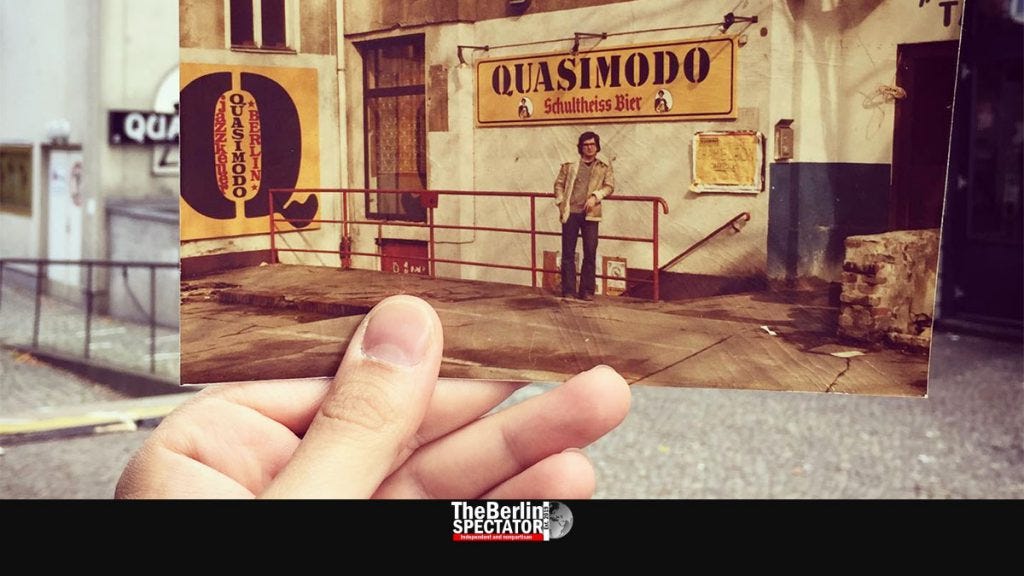
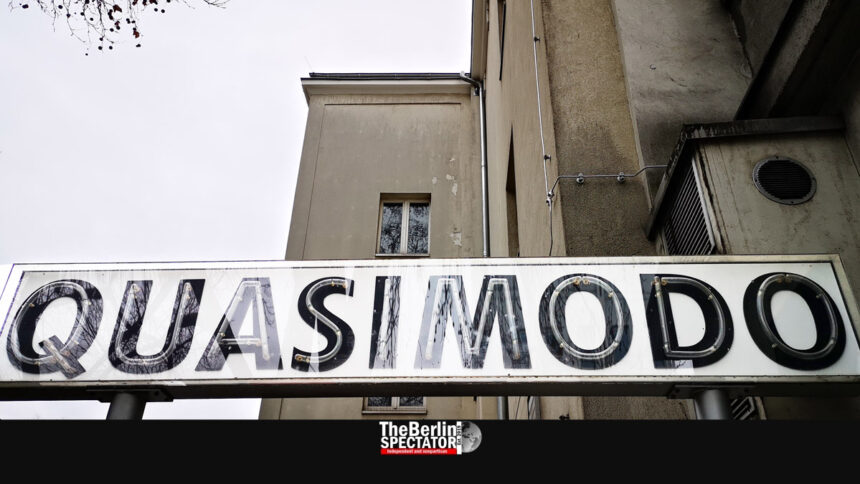
Giorgio Carioti did not go quite as far. He was a bartender at a pub in Charlottenburg, a rather posh Berlin district. One day, he took over the business and named it “Quasimodo”. Then he started turning the place into a venue for music of high quality, performed by the world’s Jazz masters. Little did he know that his place would be one of the most important real music oases in Germany, and certainly in the reunified capital known as Berlin.
Gillespie, Byrd and Mouzon
Everybody mesmerized West Berlin’s jazzy and funky crowds by performing at the “Quasimodo”. In 1977, two years after its foundation, the venue’s event schedule was already quite full. Jasper van’t Hof, a Dutch piano hero, raised the roof there, in the early days. So did the late Hammond Organ player Jimmy Smith, the legendary Dizzy Gillespie, but also Bobby Byrd, Maceo Parker and Alphonse Mouzon. Did we mention the fact that absolutely everyone came to play?

Over the decades, it did not stop. It never did. The Cuban trumpet genius Arturo Sandoval, the late French pianist Michel Petrucciani and the late American vibes master Roy Ayers came to Berlin. Guess where they performed. More and more Soul, Jazz-Funk and Acid Jazz acts hit the “Quasimodo”‘s stage too, including bands mainly known by die-hard fans, such as Raw Stylus. Oh yes, that 1996 gig was stunning. They played “37 Hours in the U.S.A.”. (So, guys, you were in NYC to see your favorite act, and you added the intro to “Josie” to the tune. Brilliant!)
“Dark and Smoky“
João Bosco and other Brazilian artists spread the most beautiful sounds on Earth at the same venue. The legendary Fusion act Spyro Gyra from New York State came. So did one of the most funky keyboarders on the planet, namely Jeff Lorber. Dammit, we could go on and on. So, what do we mean to say by all of this? The “Quasimodo” was always the place to be. Period.
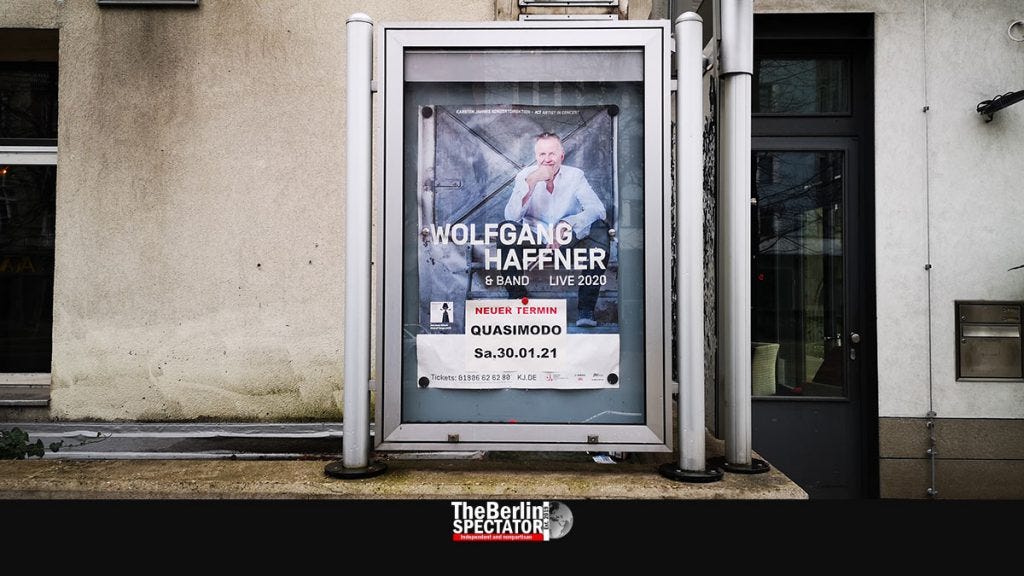
For the “New York Times”, Stephen Kinzer wrote an article entitled “Berlin Turning Into a Mecca for Jazz” in September of 1990, twenty-five days before Germany’s reunification. It said something about a “subterranean nightclub” which had become “the region’s premier Jazz showcase”. Back then, it was “dark and smoky”. Forget the smoky part, Stephen. But the dark part is still accurate. So is the “informal and appreciative atmosphere”, decades later.

Booker from Galicia
In early 2020, it all went to shit. The Corona pandemic messed up the world, the country, the city, the culture, the music and the “Quasimodo”. During the crisis, a new booker, Luis Dobarro, a young expatriate from Galicia, had to fulfill a mission impossible, namely booking artists for gigs that did not take place, just in case they would.

Back then, Dobarro, a real music lover, collector and DJ who grew up in the music business, said the business part had to curb his love for specific music at times: “If I would put on stage the acts I want to perform here, just because I love them, we would go bankrupt.”
Cultural Overkill
Channel Music GmbH operates the “Quasimodo” today, both the venue and a mixture between a beer garden and a café located upstairs. They also run the Huxley’s Neue Welt music venue and the Zitadelle Festival.

After the COVID crisis, the “Quasimodo” changed. Dobarro was suddenly gone and the programming changed. For a while, the Jazz, the Soul and the Funk were gone. Hardly any gigs took place. Today, tribute bands, parties hosted by DJs, but also some noteworthy gigs are listed in the club’s program.
A handful of Jazz and Funk paradises are scattered all over Germany. Hamburg has its “Fabrik”, Aschaffenburg the “Colos-Saal” and Munich its “Club Unterfahrt”. Berlin’s “Quasimodo”, the place where music is still music, used to be part of this list of venues. In a way it still is.
An earlier version of this piece was published on The Berlin Spectator in February of 2021.