
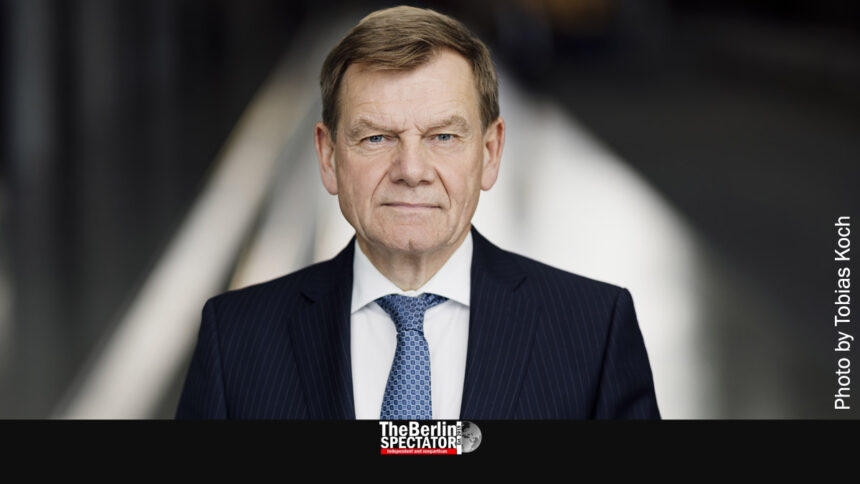
Berlin, July 1st, 2026 (The Berlin Spectator) – Foreign Minister Johann Wadephul (CDU) continued his South America trip on Wednesday with a stop in Argentina, where he was set to sign a declaration of intent with his counterpart Pablo Quirno aimed at deepening cooperation on raw materials. The agreement is the latest piece of a broader German push to diversify supply chains for critical minerals and rare earths, areas where Berlin remains heavily dependent on China.
Argentina is a natural partner for that effort. Gold, silver and lithium currently account for roughly 95 percent of the country’s mining exports, and several major new projects targeting copper and lithium are now underway, as German dailies report. Lithium in particular has become indispensable to modern technology, feeding into the batteries that power electric vehicles, smartphones, laptops, and renewable energy storage systems.
Wadephul, a member of the center-right CDU, was going to follow the same agenda in Brazil after wrapping up his stay in Buenos Aires. Both stops fit into Germany’s broader strategy of reducing reliance on Chinese supply chains for high-tech raw materials by building stronger ties with resource-rich economies elsewhere.
The trip also comes against the backdrop of a major shift in EU trade policy. Argentina, alongside Brazil, Paraguay and Uruguay, is part of the Mercosur bloc, which has formed a sweeping new free trade zone with the European Union since the beginning of May. As tariffs and trade barriers are phased out under the deal, German officials anticipate substantial long-term benefits for the country’s automotive, machinery and pharmaceutical sectors.
Beyond the diplomatic agenda, Wadephul’s Buenos Aires itinerary included a visit to the Parque de la Memoria, a memorial honoring victims of Argentina’s military dictatorship, as well as a stop at River Plate’s Estadio Monumental.